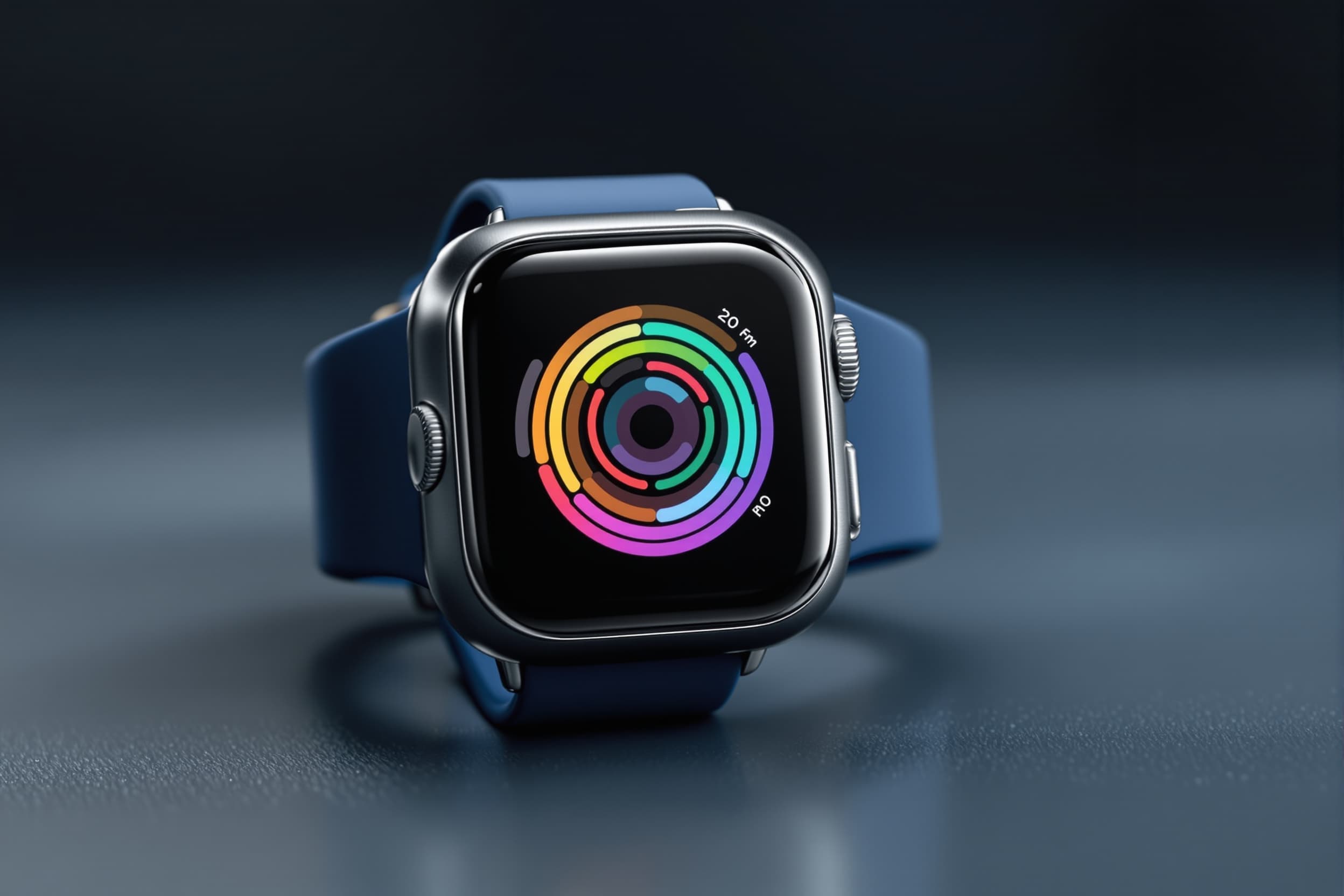
A wrist-worn sports watch designed to monitor physiological metrics comparable to Garmin Fénix 8, with advanced live muscle oxygen saturation (SmO2) tracking on multiple body locations and real-time blood lactate measurement. Combines fitness tracking, GPS navigation, heart rate, and metabolic sensors in a single wearable device for endurance athletes and performance optimization.

Feasibility at a glance
PT localization
3/10
Low
Only finishing and testing can be localised in Portugal.
Per unit
€150-€300 per unit
at 500-unit volume
Starter batch
500units
minimum viable run
To first batch
36weeks
5 phases, design to ship
Budget
€180–280k
all-in estimate
Bottom line
For a cutting-edge multi-sensor sports watch with advanced SmO2 and lactate monitoring, co-development with an established EU wearables or medical device partner is strongly recommended. Portugal and smaller EU states lack the specialized biosensor R&D, optical sensor calibration labs, and firmware ecosystem needed for this Garmin Fénix 8-level product. A partnership with an experienced German, Swiss, or Nordic player gives access to proven GNSS/HR module supply chains, medical-device-grade quality systems (essential for lactate sensing, which may require CE MDR), and the engineering depth to integrate electrochemical biosensors with multi-site SmO2 arrays. At 500 units this is a pilot/early-stage run; co-development splits NRE risk, accelerates certification (CE, RED, potentially MDR Class IIa for lactate), and ensures first-batch yields meet the precision tolerances required. Local assembly in Portugal could follow once design is frozen and volumes justify tooling transfer.
5 capabilities
Tracks heart rate, blood oxygen, and standard fitness metrics like steps, calories, and sleep
Measures live muscle oxygen saturation on multiple body parts to optimize training intensity
Monitors blood lactate levels in real time to identify anaerobic threshold and recovery status
Provides multi-GNSS navigation and route tracking for running, cycling, and outdoor sports
Syncs workout data and physiological trends to smartphone app via Bluetooth
5 stations · build route
PCB fabrication and SMT assembly
Multilayer circuit boards are etched and populated with microcontrollers, sensors, and wireless chips using automated pick-and-place machines.
Injection molding of case and bezel
Polycarbonate and reinforced polymer parts are molded in precision tools to form the waterproof housing.
CNC machining of metal bezel and buttons
Stainless steel or aluminum bezel rings and button components are CNC-turned and anodized for durability.
Optical and biosensor integration
SmO2 LED arrays, photodiodes, and lactate enzyme electrodes are bonded to flex circuits and sealed with optical windows.
Final assembly, calibration, and testing
All subassemblies are fitted into the case, firmware is flashed, sensors are calibrated against reference standards, and water resistance is pressure-tested.
PCB fabrication and SMT assembly
Multilayer circuit boards are etched and populated with microcontrollers, sensors, and wireless chips using automated pick-and-place machines.
Injection molding of case and bezel
Polycarbonate and reinforced polymer parts are molded in precision tools to form the waterproof housing.
CNC machining of metal bezel and buttons
Stainless steel or aluminum bezel rings and button components are CNC-turned and anodized for durability.
Optical and biosensor integration
SmO2 LED arrays, photodiodes, and lactate enzyme electrodes are bonded to flex circuits and sealed with optical windows.
6 identified · 4 blocking
Critical
Electrochemical lactate sensor supply and shelf-life
Electrochemical lactate sensors rely on enzyme electrodes (typically lactate oxidase immobilized on a conductive substrate) that have limited shelf life (3–12 months refrigerated) and are produced by a tiny number of suppliers globally—primarily in Germany (e.g. PalmSens, BVT Technologies) and the US (Abbott, Zimmer Biomet). At 500 units, GETMILK will not meet minimum order quantities for custom electrode production and will depend on off-the-shelf R&D-grade sensors. These may lack the calibration stability, biocompatibility coatings, and batch-to-batch consistency required for a commercial wearable. A single supplier disruption or enzyme batch failure will halt production entirely. Furthermore, if sensors require cold-chain logistics from Germany to Portugal or to end customers, fulfillment costs and failure rates will soar.
Mitigation — Identify and pre-qualify two independent lactate electrode suppliers (one EU, one US) and negotiate buffer stock agreements. Work with a co-development partner (e.g. Sensile Medical, Switzerland) who has in-house enzyme electrode fabrication and can guarantee supply. Design the watch with a replaceable lactate sensor cartridge so users can swap expired sensors without returning the device. Conduct accelerated shelf-life testing (elevated temperature, humidity) to establish realistic expiration dates and packaging requirements. Budget for 15–20% sensor inventory safety stock and plan SKU variants—one with lactate, one without—to de-risk demand if sensor availability falters.
High
IP exposure during co-development and sensor calibration
SmO2 multi-site measurement and real-time lactate tracking require proprietary signal-processing algorithms (filtering, motion artifact rejection, calibration curves) and potentially machine-learning models trained on athlete data. Sharing raw sensor data, firmware source code, and calibration methodologies with an EU co-development partner or external calibration lab creates risk that core IP will be reverse-engineered, used in the partner's own products, or leaked to competitors (e.g. Garmin, Polar, Suunto). Even with NDAs, enforcement across EU jurisdictions is costly and slow. If algorithms are deemed trade secrets rather than patented inventions, loss of confidentiality destroys the competitive moat.
Mitigation — File provisional patents (Portugal/EPO) on key algorithmic innovations (e.g. multi-site SmO2 fusion, sweat lactate-to-blood correlation) before disclosing to partners. Structure co-development agreements with clear IP ownership: GETMILK retains all firmware, algorithms, and data analytics; partner retains sensor hardware and manufacturing process IP. Implement on-device algorithm obfuscation (e.g. compiled firmware with encrypted calibration tables) and retain the master calibration database in-house. Use a third-party testing lab (e.g. TÜV SÜD, SGS) bound by confidentiality to perform independent validation rather than sharing data with manufacturing partners. Require partner to sign non-compete clauses for lactate + SmO2 wearable combinations.
High
CE medical device classification uncertainty for lactate monitoring
Real-time blood lactate monitoring occupies a grey zone in EU Medical Device Regulation (MDR 2017/745). If the watch's lactate feature is marketed with therapeutic claims (e.g. 'detect overtraining,' 'optimize recovery'), it may be classified as a Class IIa medical device, requiring a notified body review, clinical evaluation, post-market surveillance, and a quality management system per ISO 13485. This adds 9–15 months and €150k–300k to the regulatory timeline. Conversely, if marketed purely for 'sports performance insight' without health claims, it may qualify as a general consumer product under the Radio Equipment Directive (RED) and Low Voltage Directive (LVD) alone—but this limits marketing language and potential B2B medical/clinical sales channels. Ambiguity creates risk that a competitor or national authority challenges the classification post-launch, forcing expensive retrofits or market withdrawal.
Mitigation — Engage a medtech regulatory consultant (e.g. Emergo by UL, TÜV SÜD) in month 1 to conduct a formal device classification assessment and submit a preliminary query to a notified body. Develop two parallel regulatory strategies: (A) pursue Class IIa MDR with clinical validation study (n=30–50 athletes) comparing watch lactate readings to lab-grade blood analyzers, ensuring full MDR compliance and maximum market flexibility; (B) design marketing materials to avoid health/medical claims, positioning lactate as 'performance data for athletes,' relying on RED/LVD only if MDR timeline jeopardizes launch. Partner with a co-development firm (e.g. Sensile Medical) that already holds ISO 13485 certification and has a notified body relationship, dramatically accelerating the MDR path. Budget regulatory cost at €200k and 12 months for Class IIa route.
High
SmO2 optical sensor calibration and inter-unit variability
Multi-site SmO2 measurement depends on near-infrared (NIR) LED-photodiode pairs (typically 680–880 nm wavelengths) that exhibit 5–15% intensity variation unit-to-unit due to manufacturing tolerances in LED binning, photodiode responsivity, and optical window transmission. Without individual device calibration against a reference tissue phantom or in-vivo standard, SmO2 readings will vary by ±8–15 percentage points between watches, destroying athlete trust and making training zones meaningless. Building an optical calibration station with NIR reference sources, integrating spheres, and tissue-simulating phantoms requires specialized equipment (€50k–100k) and expertise not available at typical Portuguese CMs.
Mitigation — Partner with a co-development firm (e.g. Moxy Monitor, Hocoma) that has established NIR calibration infrastructure and can perform per-unit calibration as part of final test. Alternatively, contract with a European photonics test lab (e.g. Fraunhofer IMS, Osram Opto Semiconductors applications lab) to develop and qualify a portable calibration fixture that can be deployed at the final assembly site. Design firmware to store per-device calibration coefficients (gain, offset, cross-talk matrix) in non-volatile memory during production. Implement a two-point calibration procedure: (1) optical zero (sensor blocked, dark reading) and (2) reference phantom with known absorption/scattering properties. Conduct inter-unit consistency testing on a sample of 20 units from the first batch, comparing against a lab-grade NIRS system (e.g. Artinis PortaMon) to validate calibration quality before shipping.
Medium
GNSS module and RF component lead-time volatility
Multi-GNSS chipsets (GPS, Galileo, GLONASS, BeiDou) from u-blox, Qualcomm, or MediaTek have lead times of 16–26 weeks due to semiconductor shortages and high demand from automotive and IoT sectors. Antenna-in-package (AiP) modules and ceramic chip antennas are similarly constrained. At 500 units, GETMILK is a low-priority customer and may face allocation, minimum-order-quantity barriers, or price premiums. A single GNSS module shortage cascades through the entire production schedule, delaying firmware integration, field testing, and certification (RED conformity assessment requires functional RF testing).
Mitigation — Pre-order GNSS modules in month 2 (immediately after design freeze), committing to 750–1,000 units to secure distributor inventory and buffer against yield loss. Work with an authorized European distributor (e.g. Avnet, Rutronik, Würth Elektronik) rather than the chipmaker directly; distributors hold safety stock and can flex allocations. Design the main PCB with footprint compatibility for two GNSS modules (e.g. u-blox M10 and Sony CXD5610) so a second source can be qualified if primary supplier falters. Partner with an EU ODM or co-development firm that has existing allocations and buys GNSS modules at scale. Maintain close communication with the GNSS supplier's FAE team to receive early warning of lead-time changes and lock in delivery dates contractually.
Medium
Water-resistance and sensor-window sealing at 10 ATM
A sports watch rated to 10 ATM (100 meters / 330 feet) for swimming and diving requires precision gasket design, ultrasonic or laser welding of case seams, and sealed optical windows over the SmO2 LED arrays and HR sensors. Each additional sensor aperture is a potential ingress point. Lactate electrodes that contact skin or sweat must be protected by a hydrophobic membrane that passes interstitial fluid but blocks bulk water—an engineering challenge that adds cost and failure risk. At 500-unit pilot scale, injection-molding tools and sealing fixtures may not be fully optimized, leading to 5–10% failure rates in pressure testing and field returns due to fogging or water damage.
Mitigation — Specify IP68 + 10 ATM rating and require 100% pressure testing (dry and wet) of every unit as part of final QC. Use a proven case design architecture from the co-development partner or white-label platform to minimize sealing risks. Employ silicone or fluoroelastomer gaskets (not cheaper EPDM) for all sensor windows and charging contacts. Design the lactate sensor with a user-replaceable cartridge behind a sealed port, so a failed membrane does not require a full device return. Conduct accelerated life testing: 50 thermal cycles (–10°C to +60°C) followed by pressure testing to verify gasket and adhesive integrity. Partner with an experienced enclosure manufacturer (e.g. Schaffner EMC, Bopla Gehäuse Systeme in Germany) for case tooling and assembly process design.
36 weeks to first batch
Requirements freeze, industrial design, and partner selection
wk 1–6Detailed design, sensor integration engineering, and EVT builds
wk 7–16Case tooling, DVT builds, and firmware alpha integration
wk 17–24Clinical validation, calibration infrastructure, and PVT builds
wk 25–31Regulatory testing, certifications, and pilot production ramp
wk 32–36Requirements freeze, industrial design, and partner selection
Detailed design, sensor integration engineering, and EVT builds
Case tooling, DVT builds, and firmware alpha integration
wk 7–16 is the longest stretch — Detailed design, sensor integration engineering, and EVT builds takes 10 weeks of the 36 weeks on this build.
7 materials · 8 processes
Materials
Processes
682 Portuguese manufacturers matched
None cover the whole build — it splits across steps.
15 tasks · 12 weeks to first batch
Week 1
2 tasks
Freeze product requirements and BOM architecture
Lock down mechanical envelope (case dimensions, button layout, display size), electrical requirements (battery life target, sensor sampling rates, wireless protocols), and firmware scope (data fusion algorithms, app sync). Document BOM with target suppliers for GNSS, HR, display, and battery modules. Produce 1-page product spec and cost model to share with potential partners.
Initiate contact with 3–4 EU co-development partners
Reach out to Moxy Monitor (SmO2 specialists), Sensile Medical (electrochemical biosensors), Kinexon (sports wearables), and Hocoma (medical-grade sensors). Request NDAs, share product brief, and schedule video calls to assess technical fit, NRE cost-sharing model, IP ownership terms, and timeline to EVT builds.
Weeks 2–3
3 tasks
Conduct regulatory classification assessment for lactate feature
Engage medtech regulatory consultant (e.g. Emergo by UL, TÜV SÜD) to perform formal CE MDR classification analysis. Determine if lactate monitoring requires Class IIa medical device pathway or can remain general consumer product under RED/LVD. Produce decision memo with cost, timeline, and marketing language implications for both routes.
Negotiate and sign co-development agreement with lead EU partner
waits on Initiate contact with 3–4 EU co-development partners
Finalize IP ownership (GETMILK retains firmware/algorithms, partner retains sensor hardware process), NRE cost split, exclusivity terms, and per-unit pricing for 500-unit pilot and future scale options. Include non-compete clause for SmO2 + lactate wearable combinations. Secure legal review in Portugal and partner jurisdiction.
Pre-order long-lead GNSS modules and display assemblies
waits on Freeze product requirements and BOM architecture
Place advance orders for 750–1,000 multi-GNSS modules (u-blox M10 or equivalent) and color touchscreen displays through authorized EU distributor (e.g. Rutronik, Avnet). Lock delivery schedule and pricing. Arrange buffer stock to protect against 16–26 week lead times and allocation risk.
Weeks 4–7
3 tasks
Complete detailed sensor integration and PCB design
waits on Negotiate and sign co-development agreement with lead EU partner
Partner's engineering team designs SmO2 LED/photodiode array layout, integrates electrochemical lactate sensor on flex PCB, and completes main board schematic (MCU, Bluetooth SoC, power management, GNSS interface). Conduct optical simulation and power budget analysis. Output: Gerber files, BOM, and assembly drawings ready for EVT PCB fabrication.
Build 10–15 EVT prototypes with rapid PCB and 3D-printed cases
waits on Complete detailed sensor integration and PCB design
Order quick-turn PCBs (5-day service from Eurocircuits or Beta Layout). Hand-assemble or use partner's lab for SMT placement. 3D-print polycarbonate case models and fit dummy buttons/bands. Flash initial firmware to verify sensor interfaces, GNSS acquisition, and Bluetooth connectivity. Conduct benchtop optical and electrochemical tests.
Identify and pre-qualify two lactate electrode suppliers
Contact German (e.g. PalmSens, BVT Technologies) and US suppliers of lactate oxidase enzyme electrodes. Request sample electrodes, datasheets, shelf-life specs, MOQs, and lead times. Negotiate buffer stock or consignment inventory agreements. Document cold-chain logistics and storage requirements.
Weeks 8–16
6 tasks
Commission injection-molding and CNC tooling for case and bezel
waits on Build 10–15 EVT prototypes with rapid PCB and 3D-printed cases
Finalize CAD for polycarbonate case, silicone band, and stainless steel bezel. Issue RFQs to tooling shops in Germany or Portugal (e.g. Schaffner EMC, Bopla, or local Leiria mold makers). Place deposits for mold fabrication (8–10 week lead time). Specify gasket grooves, optical windows, and 10 ATM sealing features.
Build 25–30 DVT units and conduct mechanical robustness testing
waits on Commission injection-molding and CNC tooling for case and bezel
Assemble DVT units with production-intent PCBs, first-shot molded cases, and real GNSS/display modules. Integrate firmware alpha (sensor drivers, BLE stack, UI). Perform drop tests (1.5 m onto concrete), button life cycling (10k presses), strap pull tests (50 N), and pressure testing to 12 ATM. Iterate gasket and sealing design based on results.
Develop optical calibration procedure and reference test station
waits on Build 25–30 DVT units and conduct mechanical robustness testing
Ongoing
1 task
Weekly partner sync and risk review
Hold 60-minute video call with co-development partner's program manager and lead engineers. Review design progress, component delivery status, test results, and regulatory milestones. Escalate blockers (e.g. GNSS module allocation, enzyme electrode availability, tooling delays). Maintain shared project tracker and risk register.
5 roles to fill before month one
SmO2 sensor technology partner and co-development lead
Dr. Markus Hämmerle, CTO or Business Development lead at Moxy Monitor (Fortiori Design, Switzerland)
Moxy Monitor is the leading commercial SmO2 wearable sensor provider; their NIRS expertise, proven optical design, and existing calibration infrastructure will de-risk the most technically challenging component. Dr. Hämmerle can negotiate NRE cost-sharing, IP boundaries, and per-unit pricing for integrated SmO2 arrays, and provide access to reference validation equipment.
CE MDR classification and notified body liaison
Regulatory affairs consultant at Emergo by UL (Utrecht, Netherlands or remote EU coverage)
The lactate monitoring feature sits in a regulatory grey zone; Emergo's medtech specialists will conduct a formal classification assessment, guide whether to pursue Class IIa MDR or stay under RED/LVD, and manage notified body submissions if needed. They save 6–12 months and avoid costly post-launch compliance challenges.
Lactate biosensor supplier and integration advisor
Dr. Felix Gassmann, Head of Electrochemical Sensors at Sensile Medical (Hettlingen, Switzerland)
Sensile Medical has deep expertise in electrochemical biosensors (lactate, glucose) and ISO 13485 quality systems. Dr. Gassmann can supply or recommend enzyme electrode sources, advise on hydrophobic membrane design, cold-chain logistics, and shelf-life testing, and potentially offer a replaceable sensor cartridge design to mitigate supply risk.
5 things to avoid in this plan
lead time
Lock in co-development partner and NRE cost-share by week 3—delays cascade through entire 36-week supply chain and jeopardize pilot timeline
lead time
Pre-order GNSS modules and displays immediately after BOM freeze; 16–26 week lead times and allocation risk are the #1 schedule threat at 500-unit volume
supply
Secure two independent lactate electrode suppliers with buffer stock agreements; enzyme shelf-life and cold-chain logistics can halt production if single-sourced
certification
Clarify CE MDR classification (Class IIa vs. RED/LVD only) by week 4; regulatory path determines budget (+€150k), timeline (+12 months), and marketing claims
watch-out
Establish per-unit optical calibration procedure by DVT phase; without it, inter-unit SmO2 variability (±10–15 pp) destroys athlete credibility and product viability
2 tasks in week 1
Freeze product requirements and BOM architecture
Final assembly, calibration, and testing
All subassemblies are fitted into the case, firmware is flashed, sensors are calibrated against reference standards, and water resistance is pressure-tested.
Clinical validation, calibration infrastructure, and PVT builds
Regulatory testing, certifications, and pilot production ramp
Partner or contracted photonics lab (e.g. Fraunhofer IMS) builds NIR calibration fixture with tissue-simulating phantoms and reference NIRS system. Define two-point calibration (optical zero and known absorption target). Write calibration firmware to store per-device coefficients in NVM. Validate procedure on 10 DVT units, measuring inter-unit SmO2 consistency (target ±5 percentage points).
Conduct small-scale athlete validation study (10–15 subjects)
waits on Build 25–30 DVT units and conduct mechanical robustness testing
Recruit local endurance athletes (runners, cyclists). Compare watch SmO2 and lactate readings to lab-grade reference devices (e.g. Artinis PortaMon NIRS, Lactate Pro 2 blood meter) during incremental exercise tests. Collect data to refine calibration curves and algorithm parameters. Document protocol and results for regulatory submission if MDR Class IIa is pursued.
Perform EMC pre-compliance testing and RED preparation
waits on Build 25–30 DVT units and conduct mechanical robustness testing
Conduct radiated emissions, conducted emissions, and ESD immunity testing on DVT units at partner's or nearby EMC lab. Identify and fix any issues (shielding, filtering, grounding). Prepare technical documentation for CE RED: block diagrams, RF output power measurements, frequency spectrum plots. Select accredited RED test lab (e.g. TÜV Rheinland) and reserve test slot for month 4.
Draft IP agreements and file provisional patents on algorithms
waits on Negotiate and sign co-development agreement with lead EU partner
Work with Portuguese or EU patent attorney to file provisional patent applications (Portugal/EPO) covering multi-site SmO2 data fusion and sweat lactate-to-blood correlation algorithms. Finalize IP ownership clauses in co-development agreement. Implement firmware obfuscation (encrypted calibration tables, compiled binaries) to protect trade secrets during field testing.
GNSS module sourcing, allocation, and technical support
FAE (Field Application Engineer) at Rutronik or Avnet Silica, GNSS/wireless components division (Munich, Germany or EU-wide support)
At 500-unit pilot volume, GETMILK needs a distributor who can secure u-blox or equivalent GNSS module allocation, hold buffer stock, and provide antenna design review and RF integration support. The FAE will flag lead-time changes early and help qualify a second-source module to avoid single-supplier risk.
IP strategy and provisional patent filing
Patent attorney specializing in wearable medical devices at Inventa (Porto, Portugal) or Hoffmann Eitle (Munich, Germany)
Protecting the SmO2 fusion and lactate correlation algorithms before disclosing to partners is critical. This attorney will draft and file provisional patents (Portugal/EPO), structure IP ownership clauses in the co-development agreement, and advise on trade secret vs. patent strategy to maximize competitive moat while enabling collaboration.
682 matched · 8 shown, ranked by coverage
Covers, left to right: PCB Fabrication · SMT Assembly · Injection Molding · CNC Machining · Laser Cutting · Final Assembly · Testing & Inspection · Packaging
Manufacturer
Location
Covers
Certifications
People
Portuguese producers per required step
Final Assembly
369
CNC Machining
212
Testing & Inspection
178
Injection Molding
174
SMT Assembly
36
Laser Cutting
13
PCB Fabrication
6
How many cover more than one step
The gap
For a cutting-edge multi-sensor sports watch with advanced SmO2 and lactate monitoring, co-development with an established EU wearables or medical device partner is strongly recommended. Portugal and smaller EU states lack the specialized biosensor R&D, optical sensor calibration labs, and firmware ecosystem needed for this Garmin Fénix 8-level product. A partnership with an experienced German, Swiss, or Nordic player gives access to proven GNSS/HR module supply chains, medical-device-grade quality systems (essential for lactate sensing, which may require CE MDR), and the engineering depth to integrate electrochemical biosensors with multi-site SmO2 arrays. At 500 units this is a pilot/early-stage run; co-development splits NRE risk, accelerates certification (CE, RED, potentially MDR Class IIa for lactate), and ensures first-batch yields meet the precision tolerances required. Local assembly in Portugal could follow once design is frozen and volumes justify tooling transfer.
Send one RFQ to the top 4
Keenfinity EMS, Uartrónica, REROM, MOLDMAK — same package, one click.
Packaging
0