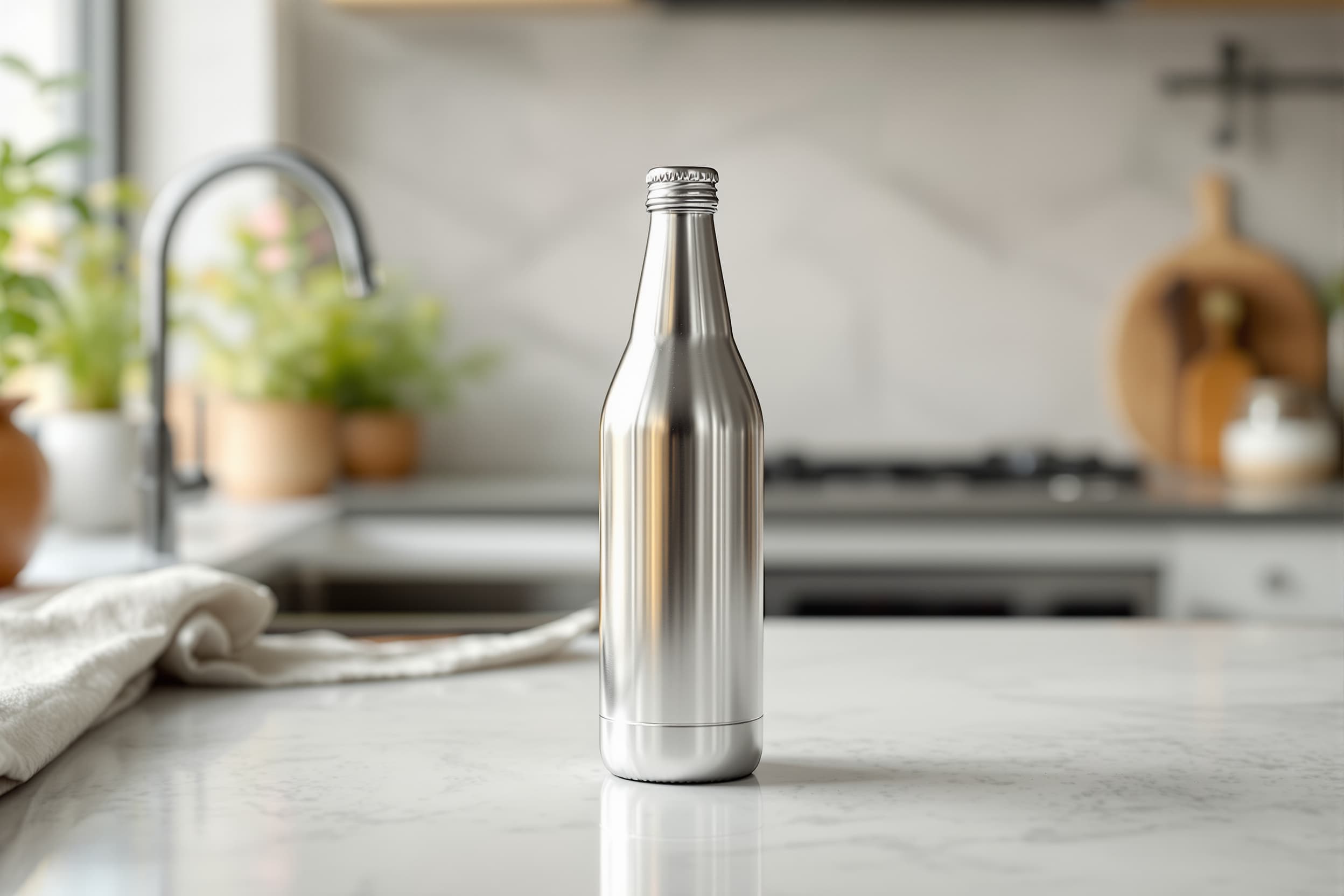
A single-use or refillable aluminum bottle designed for packaging and dispensing beer. Lightweight, impact-resistant, and recyclable, it provides a barrier to light and oxygen, preserving beer freshness. Typically features a threaded neck for a screw cap or accepts a crown cap closure.

Feasibility at a glance
PT localization
7/10
High
Most steps can be localised in Portugal.
Per unit
€0.50–1.50 per unit
at 10000-unit volume
Starter batch
10,000units
minimum viable run
To first batch
14weeks
7 phases, design to ship
Budget
€12,000–18,000 total
all-in estimate
Bottom line
Portugal lacks large-scale aluminum beverage container manufacturing infrastructure. White-label sourcing from established EU aluminum bottle suppliers (primarily in Central Europe) offers the fastest market entry with proven food-safety compliance, minimal tooling investment, and competitive MOQs around 10,000 units. Local Portuguese players focus on glass (Vidrala, Verallia) rather than aluminum beverage packaging. White-label allows branding customization while leveraging existing production lines designed for carbonated beverages.
3 capabilities
Contain and protect beer from light, oxygen, and physical damage during storage and transport
Maintain carbonation and freshness with an airtight seal
Provide a convenient, recyclable, and lightweight alternative to glass bottles
5 stations · build route
Blank punching and drawing
Aluminum sheet is cut into circular blanks and deep-drawn into bottle shape using impact extrusion or multi-stage drawing.
Neck forming and threading
The top of the bottle is shaped and threads or crown-cap edge are formed by spinning or machining.
Internal coating application
A food-safe epoxy or polymer coating is sprayed or rolled inside the bottle and cured to prevent taste migration.
External finishing and printing
The exterior is anodized or coated, then printed with branding using offset or digital printing.
Quality inspection and packaging
Bottles are tested for leaks, coating integrity, and dimensional accuracy before bulk packaging.
Blank punching and drawing
Aluminum sheet is cut into circular blanks and deep-drawn into bottle shape using impact extrusion or multi-stage drawing.
Neck forming and threading
The top of the bottle is shaped and threads or crown-cap edge are formed by spinning or machining.
Internal coating application
A food-safe epoxy or polymer coating is sprayed or rolled inside the bottle and cured to prevent taste migration.
External finishing and printing
The exterior is anodized or coated, then printed with branding using offset or digital printing.
Quality inspection and packaging
Bottles are tested for leaks, coating integrity, and dimensional accuracy before bulk packaging.
6 identified · 2 blocking
Critical
Food-safety compliance and coating integrity
Aluminum beverage bottles require a food-grade internal coating (typically epoxy or polymer-based) to prevent aluminum ions from migrating into the beer, which would alter taste and potentially violate EU Regulation 10/2011 on plastic materials in contact with food, and Framework Regulation EC 1935/2004. If the coating is incomplete, improperly cured, or uses non-compliant resins, the product cannot be legally sold in the EU and poses health risks. This is especially critical when sourcing from non-EU suppliers or first-time manufacturers.
Mitigation — Require supplier certification (e.g., ISEGA, SGS, or TÜV test reports) proving compliance with EC 10/2011 and 1935/2004 before any production. Conduct third-party migration testing on first batches per EN 13130 standards. For white-label suppliers, request certificates of conformity (DoC) and audit their coating processes. Implement batch QC checks for coating thickness (typically 5–10 µm) and visual defects. Maintain traceability for every batch.
High
Pressure and seal integrity for carbonated beverages
Beer is typically carbonated to 2.2–2.8 volumes CO₂, resulting in internal pressures of 2–4 bar at room temperature. If the aluminum bottle wall thickness is insufficient, the neck threading is poorly formed, or the closure interface is out-of-spec, bottles may leak, burst during transport, or fail to maintain carbonation. This results in product spoilage, customer complaints, and potential liability. The risk is higher with untested tooling or first-time manufacturers.
Mitigation — Specify minimum wall thickness (0.3–0.4 mm for typical 330–500 ml bottles) and require finite element analysis (FEA) validation for pressure resistance up to 6 bar (2× safety factor). Conduct burst testing on samples per ASTM D2852. Verify neck thread profiles match ISO or industry-standard closures (e.g., 28 mm PCO or crown cap profiles). Implement 100% leak testing using air-under-water or vacuum decay methods before shipment. Source closures from certified suppliers (e.g., Guala Closures, Pelliconi).
Medium
Supply chain concentration and capacity constraints
The European aluminum beverage packaging market is highly concentrated among 3–4 major players (Ball, Ardagh, CANPACK, Crown). These suppliers prioritize large multinational beverage brands, and capacity can be constrained during peak summer demand or due to aluminum sheet shortages. A new craft beer brand ordering 10,000 units may face deprioritization, delayed deliveries, or outright rejection during high-demand periods. This risk is compounded by aluminum's commodity price volatility.
Mitigation — Secure a framework agreement or offtake commitment with a white-label supplier early (6+ months before launch). Build relationships with secondary suppliers or smaller converters in Poland, Spain, or Italy as backup. Negotiate price-hedging clauses or fixed-price contracts for aluminum alloy (LME-linked). For long-term volumes, consider co-investing in dedicated tooling to secure priority allocation. Maintain 4–6 weeks of safety stock once production stabilizes.
Medium
Printing and branding quality variability
Aluminum bottles can be decorated via direct printing (offset, digital, flexo) or pressure-sensitive labels. Poor print adhesion, color misregistration, or coating incompatibility can result in branding that smudges, fades, or peels during cold storage or handling. This is critical for premium beer brands where shelf appeal drives purchase decisions. White-label suppliers may outsource printing to third parties, adding a handoff risk.
Mitigation — Request printed samples and conduct rub/scratch resistance tests per ASTM D5264. Specify food-safe, UV-resistant inks compliant with Swiss Ordinance or EuPIA exclusion lists. For high-volume runs, require a pre-production proof and color approval using Pantone or HKS standards. If using labels, ensure adhesive is rated for cold-chain (0–4°C) and condensation. Audit the printing subcontractor if not done in-house by the bottle supplier. Inspect first-article samples on-site before full production.
Medium
Extended lead times and logistics delays
Aluminum bottle production involves multiple sequential steps (extrusion, coating, curing, printing, inspection) that cannot be easily parallelized. A 10,000-unit order may require 2–3 weeks of production time alone, plus coating cure cycles, printing queues, and shipping. Any delay in raw material supply (aluminum coil shortages) or equipment downtime cascades through the schedule. For a new product launch, missing the planned retail date can forfeit shelf space or promotional windows.
Mitigation — Add 2–4 weeks of buffer to the supplier's quoted lead time for first orders. Request a detailed production schedule with milestones (blanking, coating, printing) and weekly progress updates. Use Incoterms DDP (Delivered Duty Paid) to place logistics responsibility on the supplier. For critical launches, consider air freight for a small pre-shipment batch (500–1,000 units) to secure shelf placement while the main order ships by truck. Maintain close communication with the supplier's production planner.
Low
Recycling and sustainability claims verification
Aluminum is infinitely recyclable, and many premium beer brands highlight this in marketing. However, EU regulations (Green Claims Directive proposal, Packaging and Packaging Waste Regulation 2024) are tightening requirements for substantiating environmental claims. If the internal coating contains non-recyclable polymers or if bottles are not widely accepted in municipal recycling streams, sustainability messaging could face regulatory challenge or consumer backlash.
Mitigation — Verify that the internal coating is compatible with aluminum recycling processes (typically epoxy or polyester, avoiding PVC or multi-layer laminates). Request supplier documentation on recycled content percentage (if claiming PCR aluminum). Ensure labeling meets EU Packaging Directive sorting symbols (ALU 41). Engage with local waste management authorities in target markets to confirm aluminum bottle acceptance. Prepare lifecycle assessment (LCA) data to support any carbon footprint or recyclability claims, using ISO 14040/14044 methodology.
14 weeks to first batch
Specification finalization and supplier onboarding
wk 1–2Artwork preparation and printing proofs
wk 3–4Blank punching, impact extrusion, and neck forming
wk 5–7Internal coating application and curing
wk 8–9External finishing, anodizing, and printing
wk 10–11Quality inspection, leak testing, and packaging
wk 12–13Logistics and delivery to Portugal
wk 14Specification finalization and supplier onboarding
wk 5–7 is the longest stretch — Blank punching, impact extrusion, and neck forming takes 3 weeks of the 14 weeks on this build.
3 materials · 8 processes
Materials
Processes
515 Portuguese manufacturers matched
None cover the whole build — it splits across steps.
11 tasks · 14 weeks to first batch
Week 1
2 tasks
Finalize bottle specification and closure type
Lock bottle dimensions (330 ml or 500 ml format), neck threading (28 mm PCO or crown cap), wall thickness (0.35 mm min), and alloy (3004 or 5182). Confirm carbonation pressure target (2.5–3 bar working). Select closure supplier and obtain samples.
Request quotes and certifications from 3 EU white-label suppliers
Contact Ball, Ardagh, and CANPACK for MOQ, lead time, and unit pricing. Request EC 1935/2004 and 10/2011 compliance certificates, coating spec sheets, and sample bottles. Evaluate responsiveness and capacity for 10k order.
Weeks 2–3
3 tasks
Select supplier and sign supply agreement
waits on Request quotes and certifications from 3 EU white-label suppliers
Compare quotes, certifications, and lead times. Negotiate payment terms (30% deposit, 70% on delivery). Sign NDA and purchase order specifying delivery week 13, Incoterms DDP Portugal. Confirm production slot and request detailed timeline with milestones.
Prepare and submit print-ready artwork
waits on Finalize bottle specification and closure type
Design label/printing with brand logo, product info, barcode, recycling symbol (ALU 41), and multilingual regulatory text. Deliver vector files (AI/PDF) with Pantone colors. Include allergen and alcohol volume declarations per EU 1169/2011.
Commission third-party food-contact migration test
waits on Select supplier and sign supply agreement
Engage SGS, TÜV, or ISEGA to perform EN 13130 migration testing on supplier's coating samples. Verify compliance with EC 10/2011 specific migration limits (aluminum ions, BPA if epoxy-based). Budget €800–1,200.
Weeks 4–7
2 tasks
Approve printed proof samples
waits on Prepare and submit print-ready artwork
Supplier sends physical printed samples (on scrap bottles or sheets). Review color accuracy, registration, text legibility, and rub resistance. Provide feedback or final approval within 48 hours to avoid production delays.
Confirm closure compatibility and seal testing plan
waits on Select supplier and sign supply agreement
Test-fit closures (caps or crowns) on sample bottles from supplier. Verify thread engagement and torque requirements. Define leak-test protocol (air-under-water, 100% inspection) and pressure burst sampling (min 6 bar on 10 units).
Weeks 8–16
4 tasks
Monitor production milestones and request progress updates
waits on Approve printed proof samples
Track supplier's progress: blank punching (week 6), coating/curing (week 8), printing (week 10), QC (week 12). Request photos or batch reports at each stage. Escalate immediately if any delays surface.
Conduct first-article inspection on pre-shipment samples
waits on Monitor production milestones and request progress updates
Supplier ships 20–50 sample bottles by courier (week 12). Inspect dimensions (calipers), coating (visual + pinhole dye test), print quality (rub test), and perform in-house leak testing with water and compressed air. Document findings; approve or request rework.
Arrange logistics and receiving at Portuguese facility
waits on Conduct first-article inspection on pre-shipment samples
Coordinate truck delivery (DDP terms) to brewery or co-packer warehouse. Confirm delivery date (week 13–14), receiving dock hours, and forklift/pallet jack availability. Prepare receiving checklist: pallet count, packaging integrity, batch labels, certificates of conformity.
4 roles to fill before month one
Sales/technical contact at Ball, Ardagh, or CANPACK
White-label aluminum bottle supplier account manager
Primary point of contact for quoting, order placement, production scheduling, artwork coordination, and milestone updates. Critical for securing capacity and resolving any production issues.
Project manager at SGS, TÜV, or ISEGA
Food-contact testing lab specialist
Coordinates EN 13130 migration testing and issues compliance certificates required for legal sale in EU. Provides third-party validation of coating safety independent of supplier claims.
Engineer at Guala Closures, Pelliconi, or equivalent
Closure supplier technical representative
Ensures thread compatibility between bottle neck and caps/crowns. Supplies matching closures and advises on torque specs and seal integrity testing protocols.
Account manager at DHL Freight, DB Schenker, or regional carrier
Freight forwarder or logistics coordinator
Manages truck transport from Central Europe to Portugal under DDP terms. Handles customs paperwork (if any), tracks shipment, and coordinates final-mile delivery to brewery warehouse.
5 things to avoid in this plan
supply
Lock in supplier capacity early—major converters prioritize large brands; a 10k order risks deprioritization during summer peak demand.
certification
Validate food-contact coating compliance with third-party testing before production; non-compliant batches cannot be sold and are unrecoverable losses.
lead time
Build 2-week schedule buffer into launch plan—any delay in coating cure, printing queue, or logistics cascades and cannot be compressed.
quality
Test closure fit and seal integrity on physical samples before full production—thread mismatches cause leaks and waste entire batch.
watch-out
Confirm artwork regulatory text (alcohol %, recycling symbols, allergen disclaimers) meets Portuguese and EU labeling laws to avoid reprints.
2 tasks in week 1
Finalize bottle specification and closure type
Artwork preparation and printing proofs
Blank punching, impact extrusion, and neck forming
Internal coating application and curing
External finishing, anodizing, and printing
Quality inspection, leak testing, and packaging
Logistics and delivery to Portugal
Receive and inspect full shipment
waits on Arrange logistics and receiving at Portuguese facility
Accept 10,000 bottles on pallets. Check for transit damage, verify batch codes match purchase order, and inspect random sample (50 units) for defects. File Certificate of Conformity and migration test reports. Release to production inventory or quarantine if issues found.
515 matched · 8 shown, ranked by coverage
Covers, left to right: Sheet Metal · Die Casting · CNC Turning · Anodizing · Testing & Inspection · Final Assembly · Packaging
Manufacturer
Location
Covers
Certifications
People
Portuguese producers per required step
Final Assembly
369
Testing & Inspection
178
Die Casting
96
CNC Turning
28
Sheet Metal
21
Anodizing
3
printing
not tracked
How many cover more than one step
The gap
Portugal lacks large-scale aluminum beverage container manufacturing infrastructure. White-label sourcing from established EU aluminum bottle suppliers (primarily in Central Europe) offers the fastest market entry with proven food-safety compliance, minimal tooling investment, and competitive MOQs around 10,000 units. Local Portuguese players focus on glass (Vidrala, Verallia) rather than aluminum beverage packaging. White-label allows branding customization while leveraging existing production lines designed for carbonated beverages.
Send one RFQ to the top 4
PSA PLAST, Promecel, Sogeclair Aerospace, Ancor Precision — same package, one click.
Packaging
0
printing has no capability rows in the registry — those steps are unmatched, not absent from Portugal.