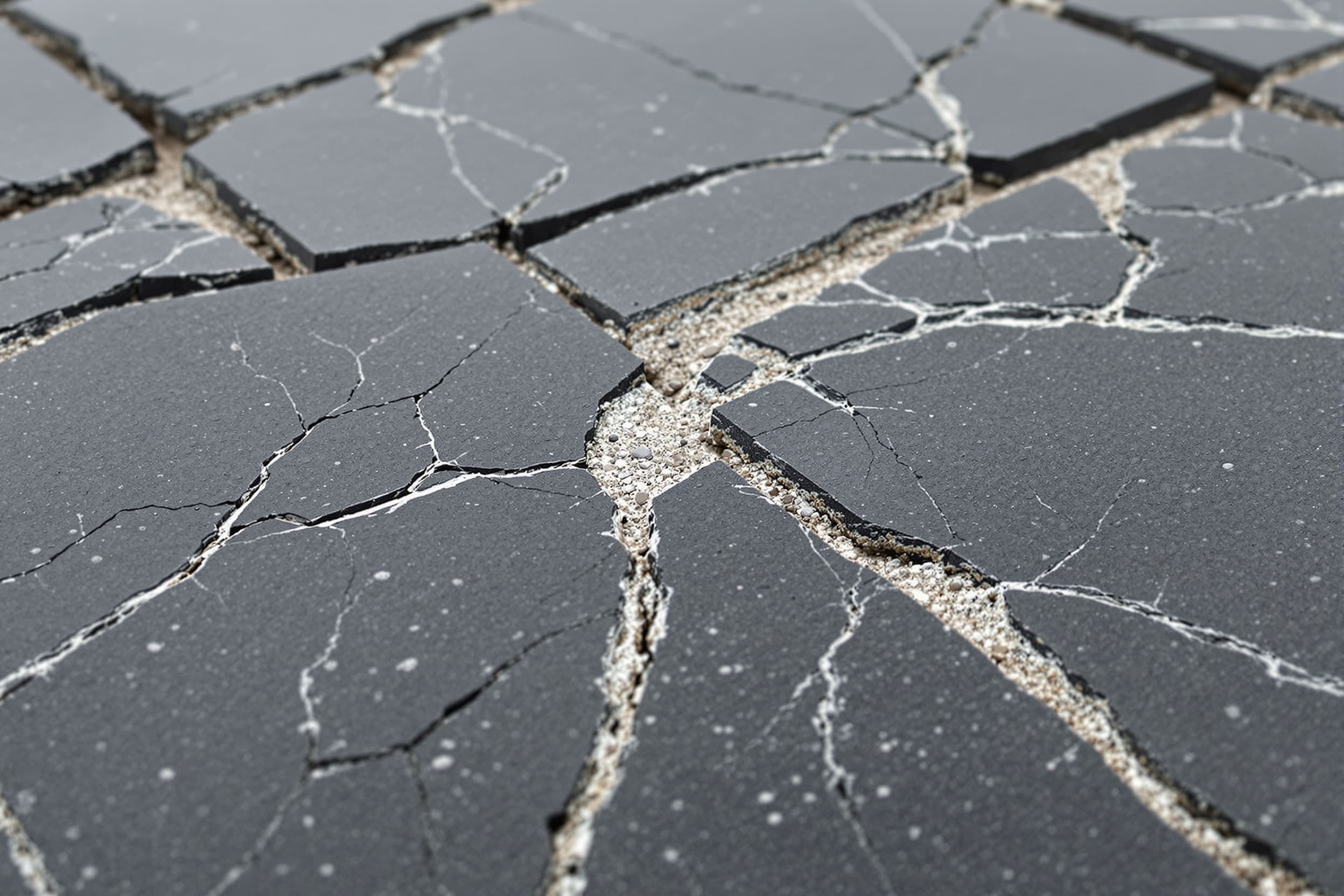
Precast concrete paver embedded with encapsulated Bacillus pseudofirmus spores and calcium lactate. When water infiltrates hairline cracks, dormant spores germinate, metabolize the nutrient, and precipitate calcium carbonate to autonomously seal cracks up to 0.8 mm wide. Meets standard structural requirements (>40 MPa compressive strength) with three surface finishes.

Feasibility at a glance
PT localization
7/10
High
Most steps can be localised in Portugal.
Per unit
€18–30 per tile
at 10000-unit volume
Starter batch
10,000units
minimum viable run
To first batch
22weeks
5 phases, design to ship
Budget
€80–120k
all-in estimate
Bottom line
Self-healing bio-concrete is a cutting-edge material requiring deep R&D collaboration. No Portuguese vendor currently masters encapsulated bacterial spore integration at scale. Co-developing with an established EU precast concrete specialist (Germany/Netherlands) allows GETMILK to secure IP, validate spore survival through casting cycles, and meet EN 1338 compliance while keeping transport costs manageable. Local production is not yet feasible; white-label availability is minimal given the novelty of the technology.
3 capabilities
Forms a durable walking or vehicle surface for plazas, sidewalks, and light-traffic zones.
Automatically repairs small cracks when rainwater activates dormant bacteria inside the concrete.
Extends service life by reducing water infiltration and freeze-thaw damage in exposed pavements.
5 stations · build route
Prepare bioactive admixture
Blend encapsulated spore beads and calcium lactate powder into a dry pre-mix that will survive the concrete mixer.
Mix cement, aggregate, spores, pigment
Combine Portland cement, quartz sand, the bioactive pre-mix, and iron-oxide dye in a low-shear mixer to preserve spore capsules.
Cast in 400×400×60 molds
Pour the blended concrete into steel or polymer molds, vibrate to remove air pockets, and apply surface finish.
Cure and test spore viability
Steam- or ambient-cure for 28 days, then sample-test compressive strength and confirm >85% live spores remain.
Inspect, palletize, shrink-wrap
Check dimensional tolerance and surface quality, stack on pallets in sets of 50–100, and wrap for transport.
Prepare bioactive admixture
Blend encapsulated spore beads and calcium lactate powder into a dry pre-mix that will survive the concrete mixer.
Mix cement, aggregate, spores, pigment
Combine Portland cement, quartz sand, the bioactive pre-mix, and iron-oxide dye in a low-shear mixer to preserve spore capsules.
Cast in 400×400×60 molds
Pour the blended concrete into steel or polymer molds, vibrate to remove air pockets, and apply surface finish.
Cure and test spore viability
Steam- or ambient-cure for 28 days, then sample-test compressive strength and confirm >85% live spores remain.
Inspect, palletize, shrink-wrap
5 identified · 2 blocking
Critical
Spore-capsule supply bottleneck
Encapsulated bacterial spores are produced by only two European sources (Basilisk in Netherlands, Fraunhofer IFAM in Germany) at pilot scale. A single production hiccup, exclusivity deal with a competitor, or quality failure can halt all paver manufacturing. Lead times for spore batches are 6–8 weeks, and shelf life is 12 months under cold storage. If the co-development partner does not have a locked supply agreement, GETMILK risks being unable to fulfill orders or forced to accept price hikes mid-contract.
Mitigation — Negotiate a three-party supply agreement (GETMILK, precast partner, spore supplier) with minimum order commitments and 90-day safety stock. Establish a second-source qualification plan with Fraunhofer if primary supplier is Basilisk, even at higher cost, to ensure continuity. Include contractual penalties for spore-supplier non-delivery.
High
Spore death during casting or curing
Encapsulated spores must survive the alkaline environment (pH 12–13) and heat of cement hydration during casting, then remain dormant through a 28-day cure cycle. Improper mixing (high shear), excessive vibration, or fast steam-curing can rupture microcapsules or trigger premature germination, leaving tiles with <50% viable spores and no self-healing capacity. Batch failures require expensive rework and delay shipments by 4–6 weeks.
Mitigation — Mandate low-shear planetary mixers and validate mixing speed/time with partner during trial batches. Implement inline spore-viability spot-checks using fluorescence microscopy every 500 tiles. Require partner to hold finished tiles for 7 days post-cure and test crack-healing on sample tiles before releasing full batch for shipment.
Medium
EN 1338 compliance and municipal approval delays
Self-healing pavers must meet EN 1338 requirements for compressive strength (≥40 MPa), freeze-thaw resistance, and abrasion. Bio-admixtures can reduce early-age strength or create voids if not properly dispersed. Municipal procurement officers may also demand field trial data or third-party certification (e.g., CE marking with notified-body testing) before approving bio-concrete for public sidewalks, adding 8–12 weeks to the sales cycle.
Mitigation — Select an EU partner with existing EN 1338 certification and in-house test lab accredited to ISO 17025. Conduct freeze-thaw and abrasion testing on first trial batch and prepare a technical dossier with crack-healing video evidence for municipal tenders. Budget €8–12k for third-party CE conformity assessment if required by target markets (Spain, Portugal, France).
Medium
Intellectual property and formulation leakage
The spore encapsulation recipe, nutrient ratio, and low-shear mixing protocol represent significant IP. If the co-development partner or spore supplier is not bound by exclusivity or NDA, they may license the same formulation to competitors or pivot to direct sales, commoditizing GETMILK's product within 12–18 months. Chinese manufacturers, if engaged, will reverse-engineer the capsule and nutrient blend with no recourse.
Mitigation — Draft a co-development agreement with 3-year regional exclusivity (Iberia + France) and joint ownership of process patents. File an EU patent application covering the specific nutrient-to-spore ratio and curing protocol within 6 months of first batch. Never share full formulation details with Chinese suppliers; if cost pressure forces partial China sourcing, supply pre-blended spore admixture from EU and only send cement/aggregate specs to Asia.
Low
Freight damage and tile breakage in transit
Concrete pavers are heavy (≈14 kg each) and brittle. Pallets shipped from Germany or Netherlands to Portugal via truck can suffer edge chipping or cracking if not properly shrink-wrapped and braced. A 2–5% breakage rate is typical; higher rates trigger customer complaints and return logistics costs. Ocean freight from China sees 5–8% damage due to container condensation and rough handling.
Mitigation — Specify reinforced pallet wrapping and corner bracing in the manufacturing contract. Use interleaved cardboard or foam sheets between tile layers. Negotiate Incoterms DDP (Delivered Duty Paid) so the EU partner bears freight risk and insurance. Inspect first three shipments on arrival and reject pallets with >3% damage to set quality expectations.
22 weeks to first batch
Spore-capsule procurement and formulation lock
wk 1–3Mold design and trial casting setup
wk 4–7First trial batch and spore-viability validation
wk 8–13Process optimization and EN 1338 testing
wk 14–18Production ramp and first commercial batch
wk 19–22Spore-capsule procurement and formulation lock
wk 8–13 is the longest stretch — First trial batch and spore-viability validation takes 6 weeks of the 22 weeks on this build.
5 materials · 4 processes
Materials
Processes
559 Portuguese manufacturers matched
None cover the whole build — it splits across steps.
15 tasks · 22 weeks to first batch
Week 1
2 tasks
Select EU co-development partner and initiate NDA
Screen SF-Koopmann, Kann GmbH, and Marlux for existing bio-concrete experience and Basilisk/Fraunhofer relationships. Sign mutual NDA covering spore formulation and mixing protocols. Request facility tour and sample paver quality data.
Draft three-party supply agreement framework
Outline terms for spore-capsule procurement (GETMILK, precast partner, Basilisk or Fraunhofer): minimum order 50 kg/quarter, 90-day safety stock, exclusivity for Iberia, penalties for non-delivery. Circulate to legal for review.
Weeks 2–3
3 tasks
Finalize co-development agreement with IP terms
waits on Select EU co-development partner and initiate NDA
Negotiate cost-sharing (tooling, trial batches), 3-year regional exclusivity (Iberia + France), joint ownership of process IP, and price per tile (target €20–26). Execute contract and transfer €20–30k deposit for mold adaptation.
Lock spore-capsule supplier and place first order
waits on Draft three-party supply agreement framework
Execute three-party supply agreement with Basilisk (preferred) or Fraunhofer. Order 50 kg encapsulated Bacillus pseudofirmus spores (200–400 µm alginate/PLA, 8-week lead). Confirm cold-chain transport to partner facility and 12-month shelf life.
Define pigment specs and order calcium lactate
Specify iron-oxide pigments for grey, anthracite, sand-yellow finishes with partner. Order 500 kg food-grade calcium lactate powder. Confirm REACH compliance if total imports exceed 1 tonne/year.
Weeks 4–7
3 tasks
Adapt molds and configure low-shear mixer
waits on Finalize co-development agreement with IP terms
Partner modifies 400×400×60 steel molds with vibration-dampening mounts. Program planetary mixer for 4-minute dry blend at <60 RPM to preserve spore capsules. Set up fluorescence microscope station for inline viability checks.
File provisional EU patent application
waits on Finalize co-development agreement with IP terms
Draft claims covering nutrient-to-spore ratio, low-shear mixing protocol, and 28-day ambient-cure process. File with EPO to establish priority date and block competitor IP. Budget €5–8k for patent attorney fees.
Cast first trial batch (200 tiles)
waits on Lock spore-capsule supplier and place first order, Adapt molds and configure low-shear mixer
Partner casts 200 tiles with bio-admixture once spores arrive. Ambient-cure 28 days at 18–22°C. Monitor internal temperature daily to prevent premature germination. Document mixing time, vibration duration, mold-release method.
Weeks 8–16
6 tasks
Validate spore viability and compressive strength
waits on Cast first trial batch (200 tiles)
At day 28, partner crush-tests 10 tiles (target ≥40 MPa) and extracts cores from 5 tiles for fluorescence assay (target >85% live spores). Induce hairline cracks in 3 tiles, submerge in water, photograph calcite precipitation at 7, 14, 21 days.
Optimize process and cast second batch (500 tiles)
waits on Validate spore viability and compressive strength
Refine mixing speed, vibration, and cure conditions based on trial results. Cast 500 tiles across three pigment variants. Implement inline QC: weigh every 50th tile, spot-check spore viability every 500 tiles, photograph surface finish.
Submit samples for EN 1338 certification testing
waits on Optimize process and cast second batch (500 tiles)
Send 20 tiles from second batch to ISO 17025-accredited lab for freeze-thaw (56 cycles), abrasion, slip-resistance, and compressive strength tests. Request expedited 4-week turnaround. Budget €8–12k for third-party testing and CE conformity assessment.
Ongoing
1 task
Monitor spore-supplier lead times and safety stock
waits on Lock spore-capsule supplier and place first order
Track spore-capsule inventory at partner facility. Reorder 50 kg when stock falls below 30-day supply. Audit cold-chain logs quarterly. Initiate second-source qualification with Fraunhofer if Basilisk delivery slips >2 weeks.
4 roles to fill before month one
Spore-capsule supplier and bio-concrete R&D advisor
Dr. Henk Jonkers or Basilisk technical lead
Basilisk (TU Delft spin-off) is one of two European sources for validated encapsulated bacterial spores. Founder needs direct line to ensure 8-week lead times, negotiate exclusivity for Iberia, troubleshoot spore-viability failures, and explore formulation tweaks (capsule size, nutrient ratio) if trial batches underperform.
Co-development partner and production lead
Manufacturing director at SF-Koopmann, Kann, or Marlux
This contact owns mold adaptation, low-shear mixer setup, trial casting, and scale-up to 10k tiles. Founder must align on IP terms, cost-sharing, quality gates (spore viability >85%, compressive strength ≥40 MPa), and delivery schedules. Partner's expertise in EN 1338 compliance and freeze-thaw testing is mission-critical.
Third-party certification and municipal approval facilitator
Accredited EN 1338 test-lab manager (e.g., TÜV, SGS)
Municipal procurement officers demand independent verification. Founder needs expedited freeze-thaw, abrasion, and strength testing (4-week turnaround) plus guidance on CE marking under CPR 305/2011. Lab contact can also provide template Declarations of Performance to accelerate tender submissions in Spain and Portugal.
IP protection and co-development contract advisor
5 things to avoid in this plan
supply
Lock spore-capsule supply immediately—only two EU sources (Basilisk, Fraunhofer) operate at pilot scale; a competitor exclusivity deal or production hiccup halts all manufacturing. Negotiate 90-day safety stock and second-source qualification within 6 months.
quality
Watch for spore death during casting—alkaline cement (pH 12–13) and hydration heat can rupture capsules or trigger premature germination. Mandate low-shear mixing, inline viability spot-checks every 500 tiles, and 7-day post-cure hold before batch release.
documentation
Secure 3-year regional exclusivity (Iberia + France) in co-development contract—without it, partner can license same formulation to competitors or pivot to direct sales, commoditizing your product within 18 months. File provisional EU patent within 4 weeks to block competitor IP.
certification
Budget €8–12k for EN 1338 third-party testing and CE conformity—municipal buyers will not approve bio-concrete without independent freeze-thaw, abrasion, and strength certificates. Delays here push first revenue by 8–12 weeks.
2 tasks in week 1
Select EU co-development partner and initiate NDA
Check dimensional tolerance and surface quality, stack on pallets in sets of 50–100, and wrap for transport.
Mold design and trial casting setup
First trial batch and spore-viability validation
Process optimization and EN 1338 testing
Production ramp and first commercial batch
Prepare technical dossier and CE marking documentation
waits on Submit samples for EN 1338 certification testing
Compile EN 1338 test certificates, spore-viability data, crack-healing photo series, material safety data sheets (cement, pigments, calcium lactate), and Declaration of Performance. Format for municipal tender submissions and notified-body review.
Scale to 10,000-tile production run
waits on Submit samples for EN 1338 certification testing
Partner casts 10k tiles using validated process. Cure in climate-controlled warehouse (18–22°C, <60% RH) for 28 days. Final inspection: dimensional tolerance ±2 mm, reject edge chips >5 mm, confirm color uniformity across batches.
Arrange freight and delivery to Portugal
waits on Scale to 10,000-tile production run
Negotiate DDP Incoterms so partner bears freight risk. Specify reinforced pallet wrapping, corner bracing, interleaved cardboard. Inspect first pallet on arrival; reject if >3% breakage. Coordinate delivery to pilot installation site or warehouse.
EU patent attorney specializing in bio-materials
Self-healing concrete IP landscape is crowded (TU Delft, University of Bath, multiple corporate patents). Founder needs claims drafted around the specific nutrient-to-spore ratio and curing protocol to secure exclusivity, plus contract language for joint ownership with the precast partner and regional exclusivity to prevent partner from selling same product to competitors.
watch-out
Specify DDP Incoterms and reinforced pallet wrapping—concrete pavers are heavy (14 kg each) and brittle. A 2–5% breakage rate is typical; reject first shipment if >3% damage to set quality expectations and avoid customer complaints.
559 matched · 8 shown, ranked by coverage
Covers, left to right: Injection Molding · Final Assembly · Testing & Inspection · Packaging
Manufacturer
Location
Covers
Certifications
People
Portuguese producers per required step
Final Assembly
369
Testing & Inspection
178
Injection Molding
174
Packaging
0
How many cover more than one step
The gap
Self-healing bio-concrete is a cutting-edge material requiring deep R&D collaboration. No Portuguese vendor currently masters encapsulated bacterial spore integration at scale. Co-developing with an established EU precast concrete specialist (Germany/Netherlands) allows GETMILK to secure IP, validate spore survival through casting cycles, and meet EN 1338 compliance while keeping transport costs manageable. Local production is not yet feasible; white-label availability is minimal given the novelty of the technology.
Send one RFQ to the top 4
Codica Cables, REROM, Porcher Industries, MOLDMAK — same package, one click.