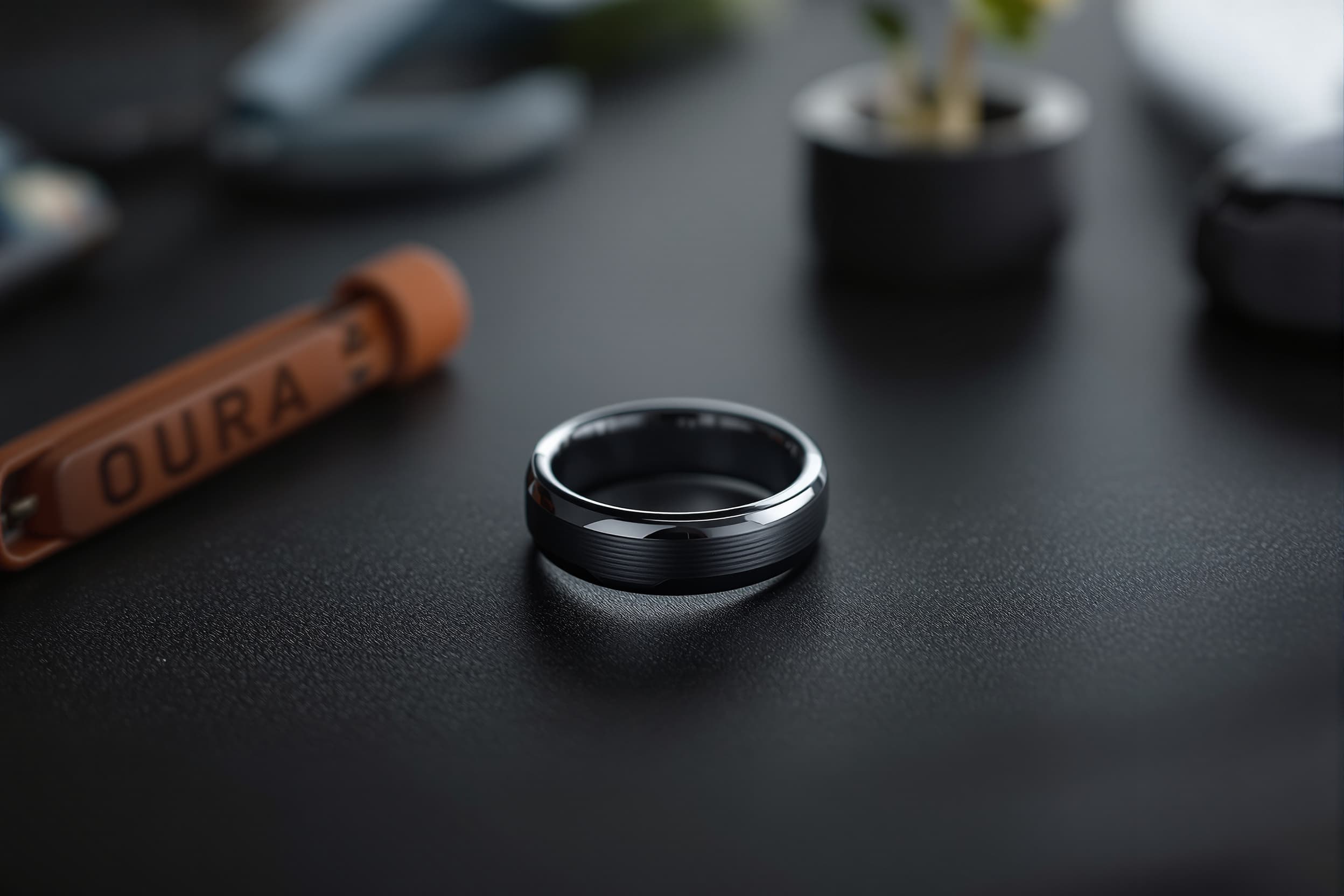
A smart ring that continuously monitors over 20 biometric signals from the finger to track sleep, activity, heart health, stress, and wellness. Designed for all-day and nighttime wear, it provides personalized health insights through an accompanying app and membership service. Available in standard and ceramic finishes.

Feasibility at a glance
PT localization
3/10
Low
Only finishing and testing can be localised in Portugal.
Per unit
$300–$500
at 10000-unit volume
Starter batch
10,000units
minimum viable run
To first batch
30weeks
8 phases, design to ship
Budget
€420–580k
all-in estimate
Bottom line
A smart ring like the Oura Ring 4 requires cutting-edge rigid-flex PCB fabrication, miniaturized optical sensor integration, precision CNC machining of titanium/ceramic shells, and advanced battery assembly—capabilities that exceed Portugal's current ecosystem. While Portuguese partners (ATEQ, PTC, Salvador Caetano) can handle shell machining and final assembly, the core electronics and sensor modules demand specialized EU partners with medical-grade wearable experience. Co-development with an established EU partner (e.g., ASML supply-chain veterans, German precision electronics houses, or Nordic wearable specialists) balances quality, IP control, regulatory alignment (CE, RoHS, REACH, MDR), and reasonable lead times. Local assembly in Portugal for final integration is feasible, but the high-value sensor and PCB steps must be sourced from mature EU ecosystems in Germany, Netherlands, or Nordics.
7 capabilities
Monitors your sleep stages, quality, and duration every night to help you understand and improve rest.
Tracks daily activity including steps, calories, and workout intensity to measure fitness progress.
Measures heart rate and heart rate variability continuously to assess cardiovascular health and recovery.
Detects body temperature trends to identify illness, cycle phases, or stress patterns.
Provides a daily readiness score that tells you whether your body is ready for activity or needs rest.
Analyzes stress levels and provides guidance on when to take breaks or practice recovery.
Syncs wirelessly with a smartphone app to display trends, insights, and personalized recommendations.
5 stations · build route
Fabricate miniature rigid-flex circuit boards
Multi-layer flexible and rigid PCB sections are laminated and etched to fit the curved ring interior.
Populate sensors and ICs via SMT assembly
Tiny optical sensors, accelerometers, Bluetooth chips, and microcontrollers are pick-and-placed and reflow soldered.
Machine and finish ring shells
Titanium or ceramic blanks are CNC-machined to size, then polished or anodized for surface finish.
Integrate battery and seal electronics
The custom lithium polymer cell is connected, the PCB assembly is inserted into the shell, and biocompatible epoxy encapsulates everything.
Functional test and calibrate sensors
Each ring is powered on, connected wirelessly, and tested for accurate biometric readings before packaging.
Fabricate miniature rigid-flex circuit boards
Multi-layer flexible and rigid PCB sections are laminated and etched to fit the curved ring interior.
Populate sensors and ICs via SMT assembly
Tiny optical sensors, accelerometers, Bluetooth chips, and microcontrollers are pick-and-placed and reflow soldered.
Machine and finish ring shells
Titanium or ceramic blanks are CNC-machined to size, then polished or anodized for surface finish.
Integrate battery and seal electronics
The custom lithium polymer cell is connected, the PCB assembly is inserted into the shell, and biocompatible epoxy encapsulates everything.
6 identified · 4 blocking
Critical
Intellectual property and firmware leakage
Smart ring designs embed proprietary sensor fusion algorithms, biometric signal processing firmware, and custom rigid-flex PCB layouts that represent the core competitive advantage. If partnering with a white-label vendor or ODM, there is a high risk that designs, firmware binaries, or sensor calibration data are shared with competitors or reverse-engineered. In China, enforcement of IP protections is weak, and cloned products can appear in the market within 6–12 months. Even in the EU, sub-contracting PCB assembly or sensor integration to third parties increases the risk of design file leakage.
Mitigation — Implement a multi-layer IP protection strategy: (1) retain all firmware and algorithm development in-house or with a trusted EU partner under strict NDA and IP assignment clauses; (2) use encrypted firmware updates and secure boot on the microcontroller to prevent extraction; (3) partition the design so that no single subcontractor has access to the complete BOM, schematics, and firmware; (4) register design patents and trademarks in EU and international markets; (5) conduct regular audits of partner facilities and enforce contractual penalties for IP breaches.
High
Optical sensor and accelerometer supply concentration
The smart ring depends on a small number of specialized suppliers for the optical heart rate sensor module (ams OSRAM, Maxim Integrated/Analog Devices) and 3-axis accelerometers (Bosch Sensortec, STMicroelectronics). These components have long lead times (16–24 weeks) and are subject to allocation during semiconductor shortages. A disruption at any single supplier can halt production entirely, as alternative sensors require firmware revalidation and regulatory recertification. The miniaturized form factor of a ring (vs. watch) further limits the number of compatible sensor modules.
Mitigation — Establish dual-source agreements with both ams OSRAM and STMicroelectronics for optical sensors, and pre-qualify alternative accelerometer modules from Bosch and STMicro during the design phase. Negotiate long-term supply agreements (LSAs) with minimum order commitments to secure allocation. Maintain a 12-week safety stock of sensor modules in EU warehouses. Design the rigid-flex PCB with modular sensor footprints to allow drop-in replacement of pin-compatible alternatives without firmware changes.
High
EU Medical Device Regulation (MDR) compliance risk
If the smart ring makes any health claims (e.g., atrial fibrillation detection, sleep apnea screening, or medical-grade heart rate monitoring), it may be classified as a Class IIa or IIb medical device under the EU Medical Device Regulation (MDR 2017/745). This requires a Notified Body audit, clinical validation studies, post-market surveillance plans, and detailed technical documentation—adding 12–18 months and €100k–€500k in certification costs. Even if marketed as a 'wellness' device, ambiguous claims or user testimonials can trigger MDR enforcement actions, product recalls, or import bans.
Mitigation — Work with a regulatory consultant early in the design phase to define the intended use and claims that keep the device outside MDR scope (wellness/lifestyle category). Avoid medical terminology in marketing and firmware output. If MDR classification is unavoidable, engage a Notified Body (e.g., TÜV SÜD, BSI, DEKRA) during prototyping to align technical files and clinical evidence requirements. Budget for clinical validation studies with EU-based testing facilities. Implement a Quality Management System (ISO 13485) from day one to streamline the certification process.
High
Hermetic sealing and biocompatible coating quality
The smart ring must achieve IP67 or IP68 water resistance and maintain biocompatibility (ISO 10993) for extended skin contact. Encapsulation of the PCB, battery, and sensors inside the ring shell using epoxy resin or silicone is a critical process with high defect risk: voids, incomplete cure, or adhesion failures lead to water ingress, battery corrosion, or skin irritation. Manual or semi-automated encapsulation processes have 3–8% defect rates, and failures often appear only after weeks of wear testing. A batch-wide sealing failure discovered post-launch can trigger costly recalls and brand damage.
Mitigation — Qualify encapsulation and coating processes using accelerated life testing (thermal cycling, humidity exposure, salt spray) on pilot-run units before ramping to volume. Implement automated dispensing and UV-curing systems for repeatable epoxy application. Conduct 100% leak testing (helium or vacuum decay) on every ring after encapsulation. Source biocompatible coatings from certified suppliers (Parylene, medical-grade silicone from Dow Corning or Wacker) with traceability and batch testing. Establish a post-market surveillance program to monitor field returns for sealing or irritation issues and trigger rapid root-cause analysis.
Medium
Rigid-flex PCB and ring shell tooling lead time
Custom rigid-flex PCBs with the multi-layer complexity and tight bend radii required for a ring form factor have 12–16 week lead times from specialized EU fabs (AT&S, Schweizer Electronic, Cicor). Titanium and ceramic ring shell tooling (CNC programs, polishing jigs, anodizing racks) adds another 8–12 weeks. Any design iteration during prototyping resets these timelines, pushing first-batch delivery by 3–6 months. Delays in PCB or shell delivery cascade through the entire production schedule, impacting market launch and customer commitments.
Mitigation — Freeze the mechanical and electrical design (CAD and Gerber files) as early as possible, using 3D-printed prototypes and off-the-shelf sensor modules for initial validation. Order long-lead tooling and PCB fabrication in parallel with prototype testing to compress the timeline. Negotiate expedited fabrication slots with PCB and shell suppliers by paying premium rates (10–20% upcharge). Maintain a prototype run of 100–200 units with interim tooling to validate fit, function, and sensor performance before committing to production-scale orders.
Medium
Lithium polymer battery shipping and compliance
Miniaturized lithium polymer battery cells are classified as dangerous goods under UN3480/3481, requiring specialized packaging, labeling, and carrier approvals for air and road transport within the EU. Shipping large quantities of loose battery cells from a cell manufacturer (e.g., Varta, Renata, or Asian suppliers) to the assembly facility can face delays due to carrier restrictions, customs holds, or seasonal capacity constraints (e.g., holiday peak periods). Any non-compliance with IATA, ADR, or national regulations can result in shipment rejection, fines, or supply interruption.
Mitigation — Work with battery suppliers that have EU distribution centers and handle all dangerous goods documentation and packaging in-house. Pre-qualify logistics providers (DHL, UPS, Kuehne+Nagel) with dangerous goods certifications and reserve capacity in advance. Consolidate battery shipments into larger, less frequent deliveries to reduce per-shipment compliance overhead. Design the production schedule to carry a 4–6 week buffer stock of battery cells at the assembly site. If possible, source from Varta (Germany) or Renata (Switzerland) to minimize cross-border shipping and leverage their established EU logistics networks.
30 weeks to first batch
Design freeze and regulatory planning
wk 1–4Rigid-flex PCB fabrication and sensor procurement
wk 5–18Ring shell tooling and machining
wk 19–28SMT assembly and sensor integration
wk 29–31Encapsulation and hermetic sealing
wk 32–33Functional testing and sensor calibration
wk 34–36Compliance testing and certification
wk 37–39Final packaging and first batch shipment
wk 40Design freeze and regulatory planning
Rigid-flex PCB fabrication and sensor procurement
wk 5–18 is the longest stretch — Rigid-flex PCB fabrication and sensor procurement takes 14 weeks of the 40 weeks on this build.
8 materials · 9 processes
Materials
Processes
684 Portuguese manufacturers matched
None cover the whole build — it splits across steps.
14 tasks · 12 weeks to first batch
Week 1
2 tasks
Freeze mechanical CAD and rigid-flex PCB design
Lock down ring shell geometry (titanium/ceramic), wall thickness, sensor placement, PCB stackup, and electrical schematics. Generate Gerber files, STEP models, and BOM with qualified sensor part numbers (ams OSRAM optical, Bosch accelerometer, Nordic nRF52 Bluetooth). Deliver design package to EU partner and PCB fab for tooling RFQs.
Engage regulatory consultant for CE and MDR roadmap
Hire EU regulatory consultant to define intended use (wellness vs. medical), classify device under MDR (aim for non-medical), and map compliance requirements (CE RED/LVD/EMC, RoHS, REACH, ISO 10993). Draft technical file structure and Declaration of Conformity template. Confirm biocompatibility testing lab and schedule.
Weeks 2–3
3 tasks
Select and contract EU Tier-1 co-development partner
waits on Freeze mechanical CAD and rigid-flex PCB design
Issue RFQs to Zollner Elektronik, Asteelflash, Flex Austria, and ams OSRAM for rigid-flex PCB assembly, sensor integration, and encapsulation. Evaluate quotes on NRE, per-unit cost, lead time, ISO 13485 certification, and IP protection clauses. Negotiate contract with IP assignment, dual-source sensor agreements, and Portugal assembly transfer clause. Sign by day 14.
Order rigid-flex PCB fabrication and sensor modules
waits on Freeze mechanical CAD and rigid-flex PCB design, Select and contract EU Tier-1 co-development partner
Submit Gerber files to AT&S Austria or Schweizer Electronic for 12-week rigid-flex PCB production (500-unit pilot run). Place long-lead orders for optical HR sensors (ams OSRAM), accelerometers (Bosch/STMicro), Bluetooth radios (Nordic nRF52), and microcontrollers. Negotiate allocation and confirm 10–12 week delivery. Pre-pay 50% deposit to secure slot.
Contract Portuguese CNC partner for ring shells
waits on Freeze mechanical CAD and rigid-flex PCB design
Engage ATEQ Portugal or PTC Group for titanium grade-5 shell machining and anodizing. Provide CAD models and tolerance specs (<0.1 mm). Order tooling (5-axis CNC programs, polishing jigs) and 1,000 shell blanks for pilot. Confirm 8–10 week delivery. For ceramic shells, evaluate German/Swiss specialists (CeramTec) and place parallel order.
Weeks 4–7
3 tasks
Finalize firmware architecture and sensor fusion algorithms
waits on Freeze mechanical CAD and rigid-flex PCB design
Complete firmware design for heart rate, HRV, SpO2, temperature, and accelerometer data acquisition, filtering, and transmission via Bluetooth. Implement secure boot and encrypted OTA update to protect IP. Test on Nordic nRF52 dev kit with off-the-shelf sensors. Deliver binary to EU partner for SMT programming by week 10.
Source lithium polymer battery cells with dangerous goods logistics
waits on Select and contract EU Tier-1 co-development partner
Procure miniaturized LiPo cells from Varta Germany or Renata Switzerland with EU distribution and UN3480 compliance. Negotiate LSA for 10k+ units, confirm 6–8 week lead time, and arrange dangerous goods carrier (DHL/UPS) with ADR/IATA certs. Establish 4-week buffer stock at EU partner SMT facility.
Qualify biocompatible encapsulation materials and process
waits on Select and contract EU Tier-1 co-development partner, Contract Portuguese CNC partner for ring shells
Select medical-grade epoxy resin or silicone (Dow Corning, Wacker) and Parylene coating for hermetic sealing. Run encapsulation trials at EU partner facility using dummy PCBs and shells. Conduct accelerated life testing (thermal cycling, humidity, salt spray) and leak testing (helium decay). Validate IP67/IP68 rating and document process parameters for production.
Weeks 8–16
4 tasks
Coordinate SMT assembly and first-article inspection
waits on Order rigid-flex PCB fabrication and sensor modules, Finalize firmware architecture and sensor fusion algorithms, Source lithium polymer battery cells with dangerous goods logistics
EU partner completes SMT assembly of 100 rigid-flex PCBs with sensors, ICs, and battery. Conduct first-article inspection (dimensional, electrical, firmware boot test). Founder or engineering lead travels to partner site for joint review. Approve production release or iterate on assembly process. Document yield (target >95%) and escalate any sensor or soldering defects.
Set up Portuguese final-assembly and testing facility
waits on Select and contract EU Tier-1 co-development partner, Contract Portuguese CNC partner for ring shells
Contract RTE, Vortex, or ISQ Group for encapsulation, leak testing, functional test (sensor calibration, wireless pairing, battery life), and packaging. Ship EU-assembled PCB modules and Portuguese-machined shells to facility. Install test jigs, pulse oximeter simulators, and traceability database. Train technicians on encapsulation, leak testing, and firmware update procedures.
Submit samples for CE, RoHS, REACH, and ISO 10993 testing
Ongoing
2 tasks
Monitor rigid-flex PCB and sensor module delivery milestones
waits on Order rigid-flex PCB fabrication and sensor modules
Weekly check-ins with AT&S (PCB fab), ams OSRAM, Bosch, Nordic Semiconductor on production status, yield, and shipping dates. Track Gerber revisions, material certifications, and dangerous goods documentation. Escalate any delays >1 week to founder. Maintain live dashboard of all long-lead components and update assembly schedule accordingly.
Conduct weekly IP and quality audits with EU partner
waits on Select and contract EU Tier-1 co-development partner
Review EU partner's access controls, NDA compliance, and subcontractor list. Verify that firmware binaries are encrypted and design files are partitioned (no single vendor has complete BOM + schematics + firmware). Audit SMT line yield, encapsulation defect rates, and leak test results. Document corrective actions for any IP breach or quality escape.
6 roles to fill before month one
Business Development Director, Medical Wearables
Dr. Hans Meier, Zollner Elektronik AG
Gate-keeper to Europe's leading rigid-flex PCB assembly and sensor integration house with ISO 13485 credentials and experience in miniaturized wearables. Essential for negotiating NRE, per-unit pricing, IP protection clauses, and coordinating multi-site production between Germany and Portugal.
Precision Machining Program Manager
Sofia Almeida, ATEQ Portugal
Leads titanium CNC machining and anodizing projects for aerospace and medical devices in Portugal. Can deliver ring shells with <0.1 mm tolerance, manage tooling NRE, and coordinate with ceramic specialists for multi-material pilot runs.
Sales Director, Wearable Sensor Solutions
Dr. Markus Fink, ams OSRAM
Controls allocation and pricing for the optical heart rate sensor modules at the core of the ring. Critical for securing long-lead component supply, negotiating dual-source agreements with STMicroelectronics, and accessing technical support for sensor calibration and firmware integration.
Operations Manager, Electronics Assembly
João Carvalho, RTE – Recursos Tecnológicos
Runs the final-assembly, encapsulation, and functional testing facility in Portugal. Will oversee encapsulation process qualification, leak testing, sensor calibration, and packaging for the 10k-unit batch. Key to transferring production knowledge from the EU partner and scaling local value-add.
5 things to avoid in this plan
lead time
Lock in dual-source sensor agreements (ams OSRAM + STMicro) immediately—optical HR modules have 16–24 week lead times and are the critical path for SMT assembly.
watch-out
Partition IP across partners: no single vendor gets firmware + PCB + BOM. Encrypt firmware, use secure boot, and audit subcontractor access controls weekly.
quality
Freeze CAD and Gerber files by day 7—any iteration resets 12-week PCB fabrication and 10-week shell tooling timelines, pushing first batch by 3+ months.
quality
Qualify encapsulation and leak testing early (week 4–6 trials)—hermetic sealing failures discovered at volume trigger batch-wide rework or recalls costing €50k–€150k.
certification
Confirm wellness-only claims with regulatory consultant by week 2—if MDR medical classification applies, add 18 months and €200k+ for Notified Body audit and clinical studies.
2 tasks in week 1
Freeze mechanical CAD and rigid-flex PCB design
Functional test and calibrate sensors
Each ring is powered on, connected wirelessly, and tested for accurate biometric readings before packaging.
Ring shell tooling and machining
SMT assembly and sensor integration
Encapsulation and hermetic sealing
Functional testing and sensor calibration
Compliance testing and certification
Final packaging and first batch shipment
waits on Coordinate SMT assembly and first-article inspection
Send 10 pre-production rings to accredited EU test labs for CE marking (RED, LVD, EMC per EN 300 328, EN 301 489, EN 62368-1), RoHS material analysis, REACH SVHC screening, and ISO 10993 biocompatibility (cytotoxicity, sensitization). Receive test reports and Declaration of Conformity by week 10. Escalate any non-conformances to EU partner for corrective action.
Negotiate dual-source sensor supply agreements
waits on Order rigid-flex PCB fabrication and sensor modules
Establish backup sensor suppliers: STMicroelectronics for optical HR (alternate to ams OSRAM), STMicro or Bosch for accelerometer. Pre-qualify alternative modules with firmware compatibility testing. Negotiate LSAs with minimum order commitments to secure allocation during shortages. Maintain 12-week safety stock of primary sensors in EU warehouse.
Regulatory Affairs Consultant, Medical Devices
Marta Ferreira, TÜV SÜD Portugal
Expert in CE marking (RED, LVD, EMC), RoHS, REACH, ISO 10993, and EU MDR. Will define intended use to avoid medical device classification, coordinate accredited lab testing, draft Declaration of Conformity, and navigate Notified Body audits if health claims escalate the regulatory burden.
Regional Account Manager, Iberia
Lars Svensson, Nordic Semiconductor
Provides nRF52 Bluetooth SoCs and firmware SDKs for wireless connectivity. Essential for securing chip allocation during shortages, accessing secure boot and encrypted OTA update libraries, and troubleshooting wireless performance during prototype and pilot testing.
684 matched · 8 shown, ranked by coverage
Covers, left to right: SMT Assembly · PCB Fabrication · Injection Molding · CNC Machining · Anodizing · Battery Pack Assembly · Final Assembly · Testing & Inspection · Packaging
Manufacturer
Location
Covers
Certifications
People
Portuguese producers per required step
Final Assembly
369
CNC Machining
212
Testing & Inspection
178
Injection Molding
174
SMT Assembly
36
PCB Fabrication
6
Anodizing
3
How many cover more than one step
The gap
A smart ring like the Oura Ring 4 requires cutting-edge rigid-flex PCB fabrication, miniaturized optical sensor integration, precision CNC machining of titanium/ceramic shells, and advanced battery assembly—capabilities that exceed Portugal's current ecosystem. While Portuguese partners (ATEQ, PTC, Salvador Caetano) can handle shell machining and final assembly, the core electronics and sensor modules demand specialized EU partners with medical-grade wearable experience. Co-development with an established EU partner (e.g., ASML supply-chain veterans, German precision electronics houses, or Nordic wearable specialists) balances quality, IP control, regulatory alignment (CE, RoHS, REACH, MDR), and reasonable lead times. Local assembly in Portugal for final integration is feasible, but the high-value sensor and PCB steps must be sourced from mature EU ecosystems in Germany, Netherlands, or Nordics.
Send one RFQ to the top 4
Keenfinity EMS, Uartrónica, REROM, MOLDMAK — same package, one click.
Battery Pack Assembly
3
Packaging
0