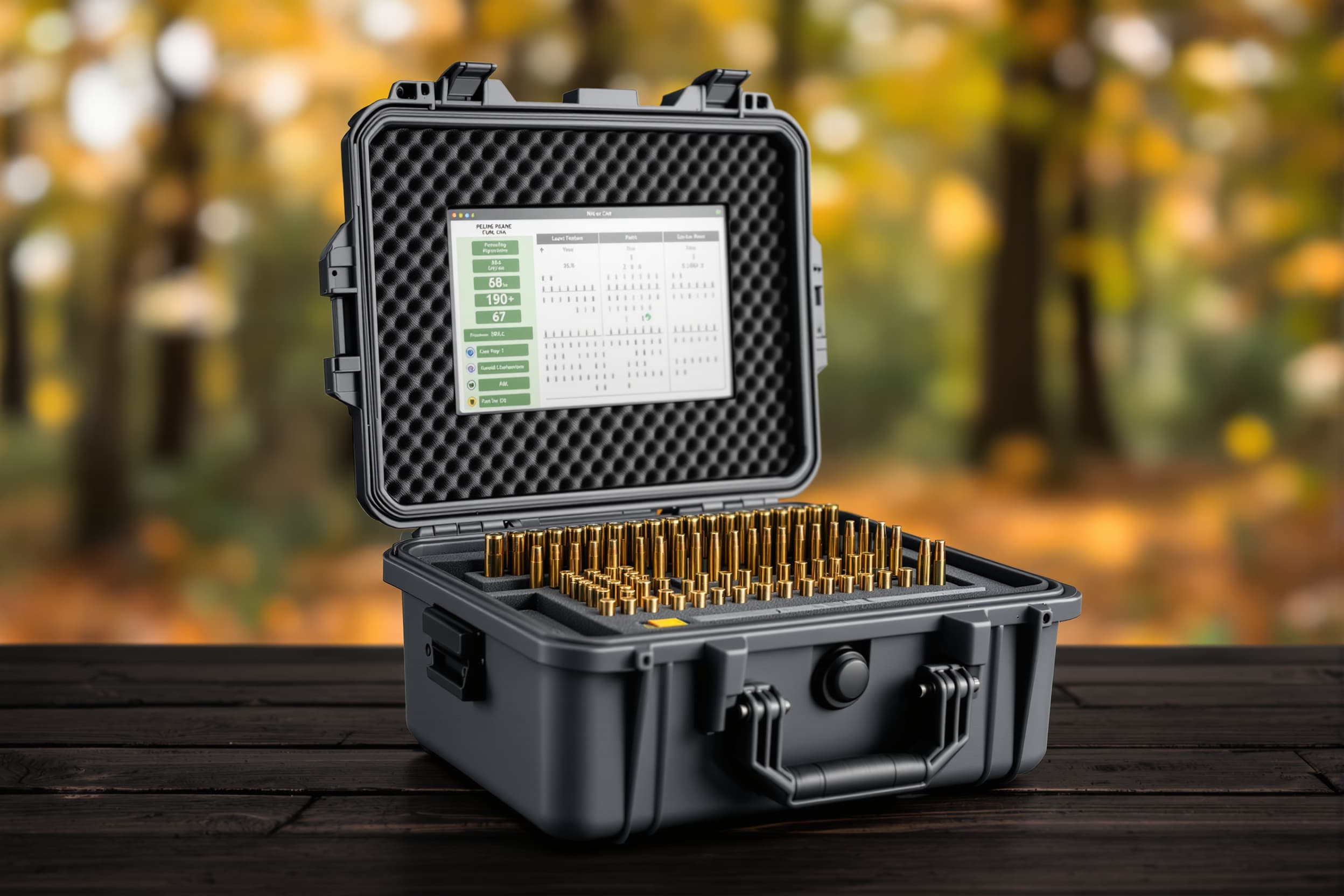
Battery-operated suitcase-sized thermal cycler for environmental DNA (eDNA) field work and mobile diagnostics. Features a 16-tube Peltier block with ±0.3°C uniformity and 5°C/s ramp rate, powered by internal 280 Wh LiFePO4 battery for 6 full cycles or external 12V DC. IP54 ruggedised case weighs 3.2 kg with touchscreen interface and optional real-time fluorescence qPCR module.

Feasibility at a glance
PT localization
6/10
Partial
Most steps can be localised in Portugal.
Per unit
€8,000–€15,000
at 80-unit volume
Starter batch
80units
minimum viable run
To first batch
28weeks
8 phases, design to ship
Budget
€95–135k
all-in estimate
Bottom line
At 80-unit production volumes, a co-development partnership with an EU specialist in precision thermal instrumentation delivers the best balance of quality, regulatory compliance, and lead time. Portugal lacks the thermal management and precision electronics capabilities needed for ±0.3°C uniformity and 5°C/s ramp rates. Full local manufacturing would require prohibitively expensive tooling and IP licensing (Peltier drivers, fluorescence optics) for this quantity. White-label options do not exist for such a niche, customized device. An EU co-development partner (e.g., thermal management specialists in Germany or Switzerland) brings validated thermal design, embedded firmware, and CE/IVD compliance infrastructure, while allowing GETMILK to specify field-ruggedness, battery configuration, and branding. Lead time is reasonable (28 weeks) and per-unit economics work at this volume.
5 capabilities
Runs polymerase chain reaction (PCR) tests in the field without lab infrastructure
Heats and cools DNA samples through precise temperature steps to amplify genetic material
Stores and runs pre-loaded protocols for common eDNA and forensic assays
Exports test data via USB-C for analysis on a laptop or tablet
Operates on battery power for remote wildlife and environmental monitoring
5 stations · build route
Machine and lap the aluminium Peltier block
CNC mill the block, then precision-lap the contact surfaces for thermal uniformity.
Assemble LiFePO4 battery pack with BMS
Spot-weld cells, integrate battery management system, and seal in protective housing.
Fabricate and populate controller and power PCBs
SMT-assemble boards with microcontroller, Peltier drivers, and power regulators.
Injection-mold the ruggedised case and lid
Mold copolymer parts with integrated ribs and gasket channels for IP54 sealing.
Final assembly, thermal calibration, and IP/functional testing
Install all modules, calibrate thermal ramps, verify IP54, and run QC PCR cycles.
Machine and lap the aluminium Peltier block
CNC mill the block, then precision-lap the contact surfaces for thermal uniformity.
Assemble LiFePO4 battery pack with BMS
Spot-weld cells, integrate battery management system, and seal in protective housing.
Fabricate and populate controller and power PCBs
SMT-assemble boards with microcontroller, Peltier drivers, and power regulators.
Injection-mold the ruggedised case and lid
Mold copolymer parts with integrated ribs and gasket channels for IP54 sealing.
Final assembly, thermal calibration, and IP/functional testing
6 identified · 3 blocking
Critical
Thermal block uniformity and ramp-rate failure
Achieving ±0.3°C uniformity across 16 tube positions and 5°C/s ramp rates is the core technical challenge. Poor thermal design—inadequate Peltier element sizing, insufficient contact pressure, uneven heat-sink coupling, or sub-optimal PID tuning—will cause tube-to-tube temperature variation, failed PCR amplification, and costly re-design cycles. For field diagnostics and eDNA work, thermal performance is non-negotiable; even 0.5°C variance can invalidate results. If the first prototype misses spec, the project faces 8–12 weeks of redesign, re-machining the aluminium block, and re-calibration, jeopardizing the launch timeline and burning budget on iterative prototypes.
Mitigation — Select an EU co-development partner (e.g., Analytik Jena, Biometra) with proven Peltier thermal-cycler IP and validated PID control libraries. Require the partner to demonstrate thermal uniformity via IR camera mapping and third-party calibration certificates on a reference design before committing to full tooling. Include contractual guarantees for ±0.3°C uniformity in the statement of work. Perform Design Verification Testing (DVT) on three pre-production units under field-like conditions (high ambient temperature, battery power) before approving mass production.
High
LiFePO4 battery safety and certification delays
A 280 Wh LiFePO4 pack exceeds the 100 Wh threshold for UN 38.3 transport testing and triggers additional scrutiny under the EU Battery Regulation (2023/1542). If the battery pack or its BMS (battery management system) lacks proper certifications—or if cells are sourced from a non-compliant supplier—the product cannot be shipped by air, complicating field deployments and customer delivery. Thermal runaway or cell imbalance during high Peltier loads (>50 W) poses fire risk. Any safety incident would halt sales and trigger costly recalls. Furthermore, the new EU Battery Regulation mandates due diligence on cobalt/nickel sourcing (even though LiFePO4 contains neither, documentation burdens remain) and end-of-life take-back schemes.
Mitigation — Source the LiFePO4 pack from an EU or Tier-1 battery integrator with existing UN 38.3, IEC 62133-2, and UL certifications. Ensure the BMS includes over-temperature cutoff, cell-balancing, and charge-rate limiting. Specify cells from established manufacturers (e.g., CATL, EVE Energy, or EU alternative like Northvolt if available). Include a thermal fuse and flame-retardant enclosure. Engage a notified body early to confirm the battery pack meets the EU Battery Regulation's due-diligence and labeling requirements. Plan for air-freight exemption paperwork (Section II of PI967) and maintain a take-back/recycling agreement with a EU battery recycler.
High
In-Vitro Diagnostic Regulation (IVDR) compliance complexity
If the thermal cycler is marketed for diagnostic use (e.g., pathogen detection, forensic DNA analysis), it falls under the EU In-Vitro Diagnostic Regulation (IVDR 2017/746), which requires a Notified Body conformity assessment for Class B or C devices. Even for research-use-only (RUO) labeling, any field trial or customer communication that implies diagnostic capability can trigger enforcement. The IVDR pathway involves technical documentation, clinical performance studies, quality management system (ISO 13485), and post-market surveillance—adding 6–12 months and €50k–€150k in compliance costs. If GETMILK's partner lacks existing IVDR files or ISO 13485 certification, the timeline extends further. Non-compliance risks product seizure at customs, inability to sell in the EU, and reputational damage.
Mitigation — Clarify the intended use and regulatory classification early: if marketed strictly for environmental eDNA research (non-diagnostic), label as 'Research Use Only' and avoid diagnostic claims. For diagnostic positioning, partner with an EU co-developer that holds ISO 13485 certification and has existing IVDR technical files for thermal cyclers. Engage a Notified Body (e.g., TÜV SÜD, BSI) at the design phase for a gap analysis. Budget €80k and 8 months for IVDR conformity assessment. Maintain a post-market surveillance plan and vigilance reporting system. If targeting forensic use, note that forensic applications may fall outside IVDR but still require traceability and quality documentation for chain-of-custody admissibility.
Medium
Long lead times for Peltier modules and fluorescence optics
High-performance Peltier modules (multi-stage, >60 W cooling capacity) and fluorescence detection optics (LED sources, dichroic filters, PMT or photodiode arrays for FAM/HEX/ROX channels) are specialty components with 12–16 week lead times from suppliers like Ferrotec (Peltier) or Hamamatsu (photodetectors). Supply-chain disruptions, allocation constraints, or minimum-order quantities can delay the entire project. If the co-development partner has not secured long-lead items early in the design phase, first article delivery slips by 8–12 weeks, jeopardizing pilot production and customer commitments.
Mitigation — During partner selection, require a Bill of Materials (BOM) review and confirm that the partner has existing supplier relationships and allocated stock for Peltier modules and fluorescence components. Place non-cancellable purchase orders for long-lead items (Peltier, optics, custom lenses) immediately after design freeze, even before DVT completion. Negotiate consignment stock or vendor-managed inventory agreements for critical components. Maintain a second-source option for Peltier modules (e.g., CUI Devices, Laird Thermal Systems) and LED sources. Build 10% buffer stock of optical and thermal sub-assemblies to de-risk subsequent production batches.
Medium
Intellectual property leakage and knock-off risk
The thermal cycler incorporates proprietary elements—PCR protocol libraries, PID tuning parameters, firmware for Peltier control, and potentially trade-secret mechanical designs for the tube carrier and thermal block. If detailed CAD files, firmware source code, or thermal calibration procedures are shared with a Chinese ODM (or even subcontractors in the EU supply chain), there is risk of IP leakage, reverse engineering, and knock-off products appearing on Alibaba within 18 months. Loss of differentiation and price erosion would undermine GETMILK's market position, especially in the premium field-portable segment. Legal recourse is costly and time-consuming, particularly across jurisdictions.
Mitigation — Engage EU partners under robust NDA and IP-assignment agreements; specify that all custom firmware, thermal algorithms, and protocol libraries remain GETMILK property. Use code obfuscation and hardware-locked firmware (e.g., secure boot on the microcontroller) to prevent reverse engineering. Avoid sharing complete CAD assemblies; provide only interface drawings and dimensional envelopes. For any Chinese subcontractors (e.g., battery cells, injection-molded parts), limit disclosure to individual components without revealing the full system architecture. Register design patents (EU and international) for distinctive mechanical and optical features. Monitor online marketplaces and enforce takedowns proactively. Consider potting or encapsulating critical PCBs to hinder reverse engineering.
Medium
Field reliability and ingress protection failures
IP54 ruggedization is specified, but real-world field conditions—dust storms, humidity, rain, accidental drops, vibration in vehicle transport—can exceed test-bench validation. Silicone gasket compression set, touchscreen adhesive failure, or fan-bearing wear can compromise ingress protection over time. If units fail in remote field deployments (e.g., Amazon rainforest, Arctic tundra), repair logistics are prohibitively expensive, customer trust erodes, and warranty costs spike. Furthermore, the device must maintain thermal performance across wide ambient temperatures (e.g., -10°C to +45°C); insufficient heat-sink sizing or fan failure in hot climates will throttle Peltier performance, extending cycle times or causing incomplete reactions.
Mitigation — Conduct environmental stress testing (EST) per IEC 60068: mechanical shock (drop test), vibration (transport simulation), temperature cycling (-20°C to +55°C), and humidity exposure (85% RH). Validate IP54 rating via third-party testing (e.g., TÜV, Intertek) with dust chamber and water-spray tests. Specify automotive-grade silicone gaskets with low compression set and UV resistance. Use industrial-grade fans with sealed bearings (e.g., Sunon MagLev) and specify MTBF >50,000 hours. Over-size the heat sink by 20% to ensure adequate cooling in high-ambient conditions. Implement remote diagnostics (via USB-C data logging) to detect early failure modes. Offer a field-swap warranty and maintain a stock of replacement modules (battery, fan, touchscreen) at regional service hubs.
28 weeks to first batch
Design freeze and regulatory gap analysis
wk 1–4Peltier block CNC machining and lapping
wk 5–9PCB fabrication and SMT assembly
wk 10–15Battery pack assembly and safety certification
wk 16–22Injection molding and case fabrication
wk 23–28Fluorescence module integration (optional)
wk 29–32Final assembly and thermal calibration
wk 33–35Environmental, functional, and regulatory testing
wk 36–38Design freeze and regulatory gap analysis
Peltier block CNC machining and lapping
wk 16–22 is the longest stretch — Battery pack assembly and safety certification takes 7 weeks of the 38 weeks on this build.
6 materials · 7 processes
Materials
Processes
684 Portuguese manufacturers matched
None cover the whole build — it splits across steps.
15 tasks · 12 weeks to first batch
Week 1
2 tasks
Define regulatory strategy and IVDR classification
Clarify intended use (diagnostic vs. research-use-only) and determine CE marking pathway. If diagnostic claims are planned, budget for ISO 13485 and Notified Body conformity assessment; otherwise, label as RUO and proceed with self-declaration. Document decision and acceptance criteria for compliance testing.
Shortlist and contact EU co-development partners
Reach out to Analytik Jena, Biometra, Hettich, and Bioer Technology (Switzerland). Request capability presentations, references for prior Peltier thermal-cycler projects, ISO 13485 certificates, and preliminary cost/timeline estimates for 80-unit co-development. Schedule video calls with engineering leads.
Weeks 2–3
3 tasks
Negotiate IP-sharing and co-development agreement
waits on Shortlist and contact EU co-development partners
Draft and finalize a co-development contract with the selected EU partner. Define IP ownership (GETMILK owns protocol libraries, UI/UX, and branding; partner retains core Peltier control algorithms under perpetual license). Establish payment milestones tied to design freeze, DVT sign-off, and first-batch delivery. Include thermal performance guarantees (±0.3°C, 5°C/s ramps).
Lock BOM and place long-lead component orders
waits on Negotiate IP-sharing and co-development agreement
Review partner's Bill of Materials. Identify Peltier modules, fluorescence LEDs/filters, LiFePO4 cells, and touchscreen with 12+ week lead times. Place non-cancellable purchase orders or confirm partner has allocated stock. Secure second-source options for Peltier elements (Ferrotec, Laird, CUI Devices).
Freeze mechanical and electrical design
waits on Negotiate IP-sharing and co-development agreement
Finalize CAD for Peltier block, case, lid, tube carrier, and all PCB schematics. Lock firmware architecture (PID control, protocol storage, USB data export). Establish DVT acceptance criteria: ±0.3°C thermal uniformity (IR camera mapping), 5°C/s ramp rate, six full PCR runs on 280 Wh battery, IP54 ingress protection, and successful PCR with lambda DNA positive controls.
Weeks 4–7
4 tasks
Commission injection-mold tooling for case and lid
waits on Freeze mechanical and electrical design
Partner's tooling vendor fabricates steel molds for ruggedized copolymer case, gasketed lid, and tube carrier. Perform mold-flow simulation to optimize gate placement and cooling channels. First-article inspection verifies dimensional tolerances and gasket-channel geometry for IP54 sealing.
CNC machine and lap Peltier thermal block
waits on Freeze mechanical and electrical design
Mill aluminium block from 6061-T6, embed Peltier pockets and RTD channels, then precision-lap top surface to <10 µm flatness. Integrate Peltier elements with thermal interface material. Perform initial IR camera thermal mapping to confirm <0.2°C variation across 16 positions under test load. Validate contact pressure with pressure-sensitive film.
Fabricate and populate controller and power PCBs
waits on Freeze mechanical and electrical design
Produce 4–6 layer PCBs (controller + power management). SMT-assemble microcontroller, Peltier H-bridge drivers, ADCs, battery charge controller, DC-DC converters, and USB-C PD IC. Flash firmware, perform ICT/flying-probe testing, and validate touch-screen integration. Conduct electrical bring-up and basic functional tests.
Weeks 8–16
5 tasks
Integrate fluorescence detection module
waits on CNC machine and lap Peltier thermal block, Fabricate and populate controller and power PCBs
Assemble clip-in fluorescence module: mount FAM/HEX/ROX LEDs, dichroic mirrors, emission filters, and photodiode array. Align optical paths, verify detection sensitivity with calibrated fluorophore standards, program firmware for synchronized data acquisition. Test spectral crosstalk and seal optical chamber against dust/light leakage.
Complete final assembly and thermal calibration
waits on Commission injection-mold tooling for case and lid, CNC machine and lap Peltier thermal block, Fabricate and populate controller and power PCBs, Assemble and certify LiFePO4 battery pack, Integrate fluorescence detection module
Integrate Peltier block, heat sink, PCBs, touchscreen, battery, case, and lid. Route and secure cabling. Load production firmware. Execute multi-point thermal calibration (50°C, 72°C, 95°C) using reference thermocouples in dummy tubes. Tune PID coefficients to achieve ±0.3°C uniformity and 5°C/s ramp rate. Calibrate fluorescence channels with known standards.
Execute DVT environmental and functional testing
Ongoing
1 task
Monitor field reliability and collect user feedback
waits on Produce and QC first 80-unit pilot batch
Deploy remote diagnostics (USB-C data logging) to track thermal performance, battery cycles, and error codes in the field. Establish a feedback loop with early customers (eDNA researchers, mobile diagnostic teams) to capture failure modes, usability issues, and feature requests. Maintain spare-part inventory (battery, fan, touchscreen) and offer field-swap warranty. Plan design improvements for subsequent production runs.
4 roles to fill before month one
EU specialist in Peltier thermal-cycler design, PID control algorithms, and IVD regulatory compliance
Thermal instrument co-development partner (e.g., Analytik Jena or Biometra)
Provides proven thermal-block IP, fluorescence optics expertise, and ISO 13485 infrastructure. Critical for achieving ±0.3°C uniformity, 5°C/s ramps, and CE/IVDR conformity assessment at 80-unit volumes without prohibitive NRE.
Third-party testing and certification lab for IVDR conformity assessment, EMC (IEC 61326-1), electrical safety (IEC 61010-1), and IP54 ingress protection
Notified Body for IVD/EMC/safety (e.g., TÜV SÜD, BSI, or Intertek)
Ensures regulatory compliance for EU market access. Early engagement (gap analysis during design freeze) prevents costly re-test cycles and accelerates CE marking. Essential if diagnostic claims trigger Notified Body pathway under IVDR.
Tier-1 battery pack assembler specializing in high-capacity LiFePO4 packs with BMS, thermal protection, and transport certifications
LiFePO4 battery integrator with UN 38.3 certification
280 Wh pack exceeds UN 38.3 threshold and triggers EU Battery Regulation compliance. Partner must deliver certified cells, spot-welding, BMS integration, and flame-retardant enclosure with documented safety testing. Reduces fire risk and enables air-freight logistics for field deployments.
5 things to avoid in this plan
cost
Watch for thermal uniformity or ramp-rate failures during DVT—demand IR camera proof and PID validation from partner before tooling commitment, and budget 4 extra weeks if re-design is needed.
certification
Lock in UN 38.3 and IEC 62133-2 certifications for the 280 Wh LiFePO4 pack early; any delay kills air-freight options and field-deployment logistics.
certification
Clarify IVDR classification immediately—diagnostic claims trigger Notified Body pathway, adding €80k and 8 months; RUO labeling avoids this but limits market positioning.
lead time
Secure Peltier modules, fluorescence LEDs, and LiFePO4 cells with 12+ week lead times at design freeze; allocate 10% buffer stock to de-risk subsequent batches.
liability
Validate IP54 sealing and field reliability (drop, vibration, temperature extremes) in DVT—gasket failures or fan-bearing wear in remote deployments are catastrophically expensive to repair.
2 tasks in week 1
Define regulatory strategy and IVDR classification
Install all modules, calibrate thermal ramps, verify IP54, and run QC PCR cycles.
PCB fabrication and SMT assembly
Battery pack assembly and safety certification
Injection molding and case fabrication
Fluorescence module integration (optional)
Final assembly and thermal calibration
Environmental, functional, and regulatory testing
Assemble and certify LiFePO4 battery pack
waits on Lock BOM and place long-lead component orders
Integrate 280 Wh LiFePO4 pack (cylindrical cells, BMS with balancing and over-temperature protection, flame-retardant housing). Spot-weld interconnects, apply insulation, install thermal fuse. Submit to accredited lab for UN 38.3 pre-qualification (altitude, thermal, vibration, short-circuit, impact). Obtain IEC 62133-2 certificate and generate SDS for transport.
waits on Complete final assembly and thermal calibration
Perform IP54 ingress protection testing (dust chamber, water spray per IEC 60529), mechanical shock/drop, vibration (transport simulation), and temperature cycling (-10°C to +45°C). Run functional PCR cycles with lambda DNA positive and no-template negative controls. Measure battery endurance (six full runs). Conduct EMC (IEC 61326-1) and electrical safety (IEC 61010-1) testing at accredited lab. Document results and sign off DVT.
Compile technical file and obtain CE marking
waits on Execute DVT environmental and functional testing
Assemble CE technical file: risk management file (ISO 14971), test reports (IP54, EMC, safety, thermal performance, PCR validation), user manual, and declaration of conformity. If IVDR applies, engage Notified Body for conformity assessment; otherwise self-declare. Affix CE marking and prepare RoHS/REACH declarations. Generate WEEE take-back documentation.
Produce and QC first 80-unit pilot batch
waits on Compile technical file and obtain CE marking
Manufacture 80 units using validated processes and tooling. Perform in-line QC (thermal calibration verification, IP54 spot-checks, battery functional tests). Run sample PCR cycles on 10% of units to confirm amplification performance. Pack units with user manuals, calibration certificates, and UN 38.3 battery documentation. Prepare for shipment to early customers and field-trial partners.
Early adopter for pilot deployment in remote environmental monitoring (e.g., Amazon biodiversity survey, Arctic permafrost study, or marine eDNA sampling)
Field-trial customer or eDNA research consortium
Provides real-world validation of IP54 ruggedization, battery endurance, and thermal performance under harsh conditions. Feedback informs design improvements and generates testimonials/case studies for commercial launch. Co-publication opportunities strengthen credibility in the eDNA and mobile diagnostics communities.
684 matched · 8 shown, ranked by coverage
Covers, left to right: CNC Machining · Battery Pack Assembly · SMT Assembly · PCB Fabrication · Injection Molding · Final Assembly · Testing & Inspection
Manufacturer
Location
Covers
Certifications
People
Portuguese producers per required step
Final Assembly
369
CNC Machining
212
Testing & Inspection
178
Injection Molding
174
SMT Assembly
36
PCB Fabrication
6
Battery Pack Assembly
3
How many cover more than one step
The gap
At 80-unit production volumes, a co-development partnership with an EU specialist in precision thermal instrumentation delivers the best balance of quality, regulatory compliance, and lead time. Portugal lacks the thermal management and precision electronics capabilities needed for ±0.3°C uniformity and 5°C/s ramp rates. Full local manufacturing would require prohibitively expensive tooling and IP licensing (Peltier drivers, fluorescence optics) for this quantity. White-label options do not exist for such a niche, customized device. An EU co-development partner (e.g., thermal management specialists in Germany or Switzerland) brings validated thermal design, embedded firmware, and CE/IVD compliance infrastructure, while allowing GETMILK to specify field-ruggedness, battery configuration, and branding. Lead time is reasonable (28 weeks) and per-unit economics work at this volume.
Send one RFQ to the top 4
REROM, MOLDMAK, ITECMO, Quickmold — same package, one click.