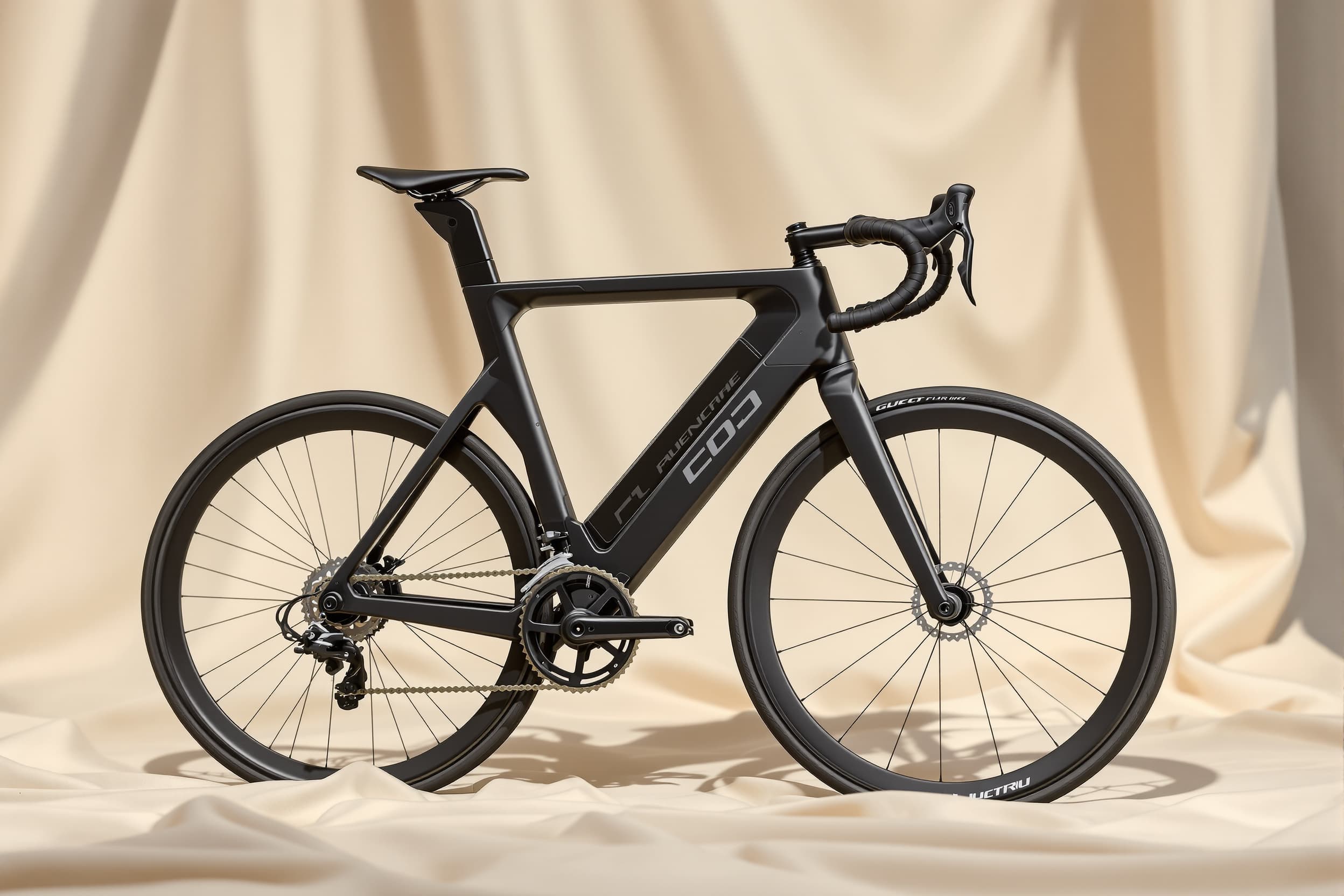
A non-drive-side crank-arm replacement for standard 24 mm-spindle road and MTB cranksets, housing four full-bridge strain gauges and wireless telemetry. Transmits power (±1.5 % accuracy, 1500 Nm range) and cadence over ANT+ and Bluetooth Low Energy using open cycling-power profiles. Runs 100 hours on a replaceable CR2032 coin cell.

Feasibility at a glance
PT localization
6/10
Partial
Most steps can be localised in Portugal.
Per unit
€200–350 per unit
at 800-unit volume
Starter batch
800units
minimum viable run
To first batch
22weeks
8 phases, design to ship
Budget
€175k–230k
all-in estimate
Bottom line
Cycling power meters demand precision machining of 7075-T6 aluminium, temperature-compensated strain-gauge bonding, SMT assembly with ANT+/BLE radios, and strict calibration procedures—capabilities that exceed typical Portuguese contract manufacturers. Co-development with an established EU partner (Germany, Italy, or Netherlands) gives access to precision CNC, strain-gauge expertise, and sports-electronics supply chains while keeping IP control, achieving CE/RED compliance in-house, and maintaining 8–10 week lead times. For 800 units the NRE and per-unit economics are viable, and you avoid the IP leakage and 16+ week delays of a China import.
3 capabilities
Measures the power you produce while pedalling in real time so you can train more precisely
Reports your pedalling speed using a built-in sensor instead of a clunky magnet
Talks to any bike computer or smartphone app over standard wireless protocols without locking you into one brand
5 stations · build route
Forge and machine the crank arm
Start with a 7075-T6 forging, then CNC-mill the strain-gauge cavity and all mounting faces to precision tolerance.
Bond and calibrate strain gauges
Adhesive-bond four full-bridge foil gauges inside the cavity and run a thermal-compensation calibration cycle.
Assemble and flash the PCB
SMT-place the microcontroller, radios, accelerometer, and battery holder; reflow solder; flash ANT+ and BLE firmware.
Pot the electronics and seal
Insert the PCB into the crank cavity, inject epoxy potting compound, and cure under vacuum to seal out moisture.
Anodise, test, and package
Hard-anodise the crank arm black or leave raw; load-test each unit on a torque rig; print the serial number and box it.
Forge and machine the crank arm
Start with a 7075-T6 forging, then CNC-mill the strain-gauge cavity and all mounting faces to precision tolerance.
Bond and calibrate strain gauges
Adhesive-bond four full-bridge foil gauges inside the cavity and run a thermal-compensation calibration cycle.
Assemble and flash the PCB
SMT-place the microcontroller, radios, accelerometer, and battery holder; reflow solder; flash ANT+ and BLE firmware.
Pot the electronics and seal
Insert the PCB into the crank cavity, inject epoxy potting compound, and cure under vacuum to seal out moisture.
Anodise, test, and package
Hard-anodise the crank arm black or leave raw; load-test each unit on a torque rig; print the serial number and box it.
5 identified · 3 blocking
Critical
Firmware and calibration-algorithm IP leakage
The core value in a power meter lies in the calibration algorithms (temperature compensation, zero-offset tracking, and power calculation) and firmware features (auto-zero, battery management, ANT+/BLE dual transmission). If these are shared with a Chinese CM or a white-label partner without strict NDAs and code-escrow agreements, clones can appear in the market within months, undercutting your price and eroding brand differentiation. Even EU partners may reuse your algorithms for other clients if IP assignment is not contractually clear.
Mitigation — Retain all firmware development in-house or with a trusted European embedded-software consultancy under a work-for-hire agreement. Provide only compiled binaries to the manufacturing partner, and use encrypted bootloaders and signed firmware updates to prevent reverse-engineering. Include explicit IP-assignment and non-compete clauses in the co-development contract. For white-label, accept that you have zero firmware IP but negotiate exclusive branding within your geographic territory.
High
7075-T6 forging supply bottleneck
Only a handful of European forges produce 7075-T6 aerospace-grade aluminium forgings in the geometries required for crank arms. Lead times for raw forgings can stretch to 10–12 weeks during peak cycling-industry season (Q1–Q2), and minimum order quantities often exceed 1000 pieces. If the partner does not hold inventory or have a standing supply agreement, the entire production schedule slips. Additionally, 7075-T6 prices have been volatile due to energy costs and aluminium tariffs, risking budget overruns.
Mitigation — Negotiate a pre-production contract with the EU co-development partner that includes forging procurement as a line item, ideally with a price lock for the first 1000 units. Qualify a secondary forging supplier in Northern Italy (e.g. in the Brescia aerospace cluster) as a backup. Consider designing the crank arm to accept both forged and billet-machined blanks so you can switch if forging supply stalls, accepting a small weight penalty.
High
RED and CE radio-equipment compliance delays
ANT+ and Bluetooth Low Energy modules must comply with the EU Radio Equipment Directive (RED 2014/53/EU), requiring test reports for radiated emissions, receiver sensitivity, and frequency stability. If the chosen radio module does not already hold RED certification, you must commission tests at a notified body, adding 6–8 weeks and €8k–12k in costs. Incorrect or incomplete technical documentation can trigger market-surveillance audits, leading to product recalls or import bans.
Mitigation — Specify only pre-certified ANT+/BLE modules from Tier-1 vendors (e.g. Nordic Semiconductor nRF52840, Texas Instruments CC2640) that provide RED Declaration of Conformity and test reports. Work with your EU co-development partner to prepare a complete Technical Construction File (TCF) covering EMC, safety, and radio performance. Engage a compliance consultant (e.g. TÜV or SGS) for a pre-audit before first shipment to catch documentation gaps early.
Medium
Strain-gauge bonding and calibration lead-time risk
Bonding four full-bridge strain gauges inside a CNC-machined cavity requires controlled temperature, humidity, and curing cycles; any contamination or misalignment invalidates the unit. Calibration involves applying known torques across the ±1500 Nm range and recording the gauge output, then fitting a temperature-compensation curve using a thermal chamber. These steps are labour-intensive and cannot be rushed. If the partner's calibration rig is shared across multiple projects, your 800-unit batch may queue behind higher-volume orders, extending lead time by 3–4 weeks.
Mitigation — During partner selection, audit the calibration rig capacity and request a dedicated time-slot in the production schedule. Build 10 % schedule buffer into your go-to-market plan. Consider a pilot run of 50 units to validate the bonding and calibration process before committing to the full 800-unit batch, allowing you to catch process issues without risking the entire order.
Medium
Potting and sealing quality variance
Epoxy potting is the primary barrier against water ingress and vibration-induced solder-joint failure. If the potting compound is not degassed under vacuum before injection, trapped air bubbles create paths for moisture, leading to premature electronics failure. Poor mixing ratios or incomplete curing can leave the potting soft, allowing the PCB to shift and break strain-gauge wire bonds. Field failures due to water ingress are expensive to diagnose and damage brand reputation in the cycling market, where power meters are expected to survive years of wet and muddy conditions.
Mitigation — Specify a two-part epoxy with proven cycling-industry heritage (e.g. Henkel Loctite or 3M Scotch-Weld) and require vacuum degassing as a process step. Include environmental testing (IPX7 immersion, thermal cycling –20 °C to +60 °C, and vibration per ISO 4210 bicycle standards) in the first-article inspection. Implement batch sampling: test 5 % of each production lot to failure, and require the partner to implement corrective actions if more than 1 % of units fail sealing tests.
22 weeks to first batch
Design freeze and forging procurement
wk 1–3CNC machining and anodising of crank arms
wk 4–7Strain-gauge bonding and wire termination
wk 8–9PCB assembly, firmware flash, and functional test
wk 10–12Integration, potting, and curing
wk 13–14Calibration and temperature compensation
wk 15–18Environmental testing and quality audit
wk 19–20Final assembly, serialisation, and packaging
wk 21–22wk 4–7 is the longest stretch — CNC machining and anodising of crank arms takes 4 weeks of the 22 weeks on this build.
6 materials · 9 processes
Materials
Processes
586 Portuguese manufacturers matched
None cover the whole build — it splits across steps.
15 tasks · 22 weeks to first batch
Week 1
2 tasks
Freeze CAD and issue forging RFQs
Lock the crank-arm design with strain-gauge cavity, pedal threads, and spindle bore geometry. Generate 2D drawings with GD&T. Request quotes from three German/Italian 7075-T6 forging suppliers for 1000 pcs with 10-week lead time. Confirm anodising compatibility.
Select EU co-development partner
Down-select from shortlist (Würth Elektronik, Bosch Sensortec region, or Italian cycling CM). Audit strain-gauge bonding process, calibration rig capacity, and RED certification experience. Negotiate NRE, per-unit cost, and IP assignment terms. Sign LOI.
Weeks 2–3
2 tasks
Order pre-certified ANT+/BLE modules
Purchase Nordic nRF52840 or TI CC2640 modules (800+ units plus 10% spares) with RED Declaration of Conformity and test reports. Verify ANT+ Alliance and Bluetooth SIG certification status. Lock component pricing and delivery by week 4.
Draft firmware architecture and calibration spec
Write high-level firmware requirements: ANT+ Cycling Power profile, BLE GATT services, auto-zero, temperature compensation algorithms. Define calibration load points (0–1500 Nm, three temps). Keep source code in-house; partner receives compiled binaries only.
Weeks 4–7
3 tasks
Procure 7075-T6 forgings and start CNC
waits on Freeze CAD and issue forging RFQs
Place PO for 1000 forged crank-arm blanks. Coordinate delivery to EU partner's CNC facility. Begin 5-axis machining of strain-gauge cavity, pedal threads, and spindle bore to ±0.05 mm tolerance. Plan hard-anodising (Type III, black) for batch 1.
Validate strain-gauge bonding on prototypes
waits on Procure 7075-T6 forgings and start CNC
Partner bonds four full-bridge gauges in ten prototype crank arms. Test adhesion, run initial continuity checks, and perform preliminary load tests. Iterate adhesive type or curing cycle if resistance drift exceeds spec. Approve bonding process for production.
Fabricate and assemble pilot PCBs
waits on Order pre-certified ANT+/BLE modules, Draft firmware architecture and calibration spec
Order 4-layer FR4 PCBs (50 units) and SMT-place microcontroller, radio module, accelerometer, battery holder. Reflow solder, flash firmware v0.9, and run functional tests (radio TX, accelerometer read, strain ADC). Rework or scrap failures.
Weeks 8–16
7 tasks
Integrate, pot, and cure pilot units
waits on Validate strain-gauge bonding on prototypes, Fabricate and assemble pilot PCBs
Insert tested PCBs into ten prototype crank arms, connect strain-gauge wires, inject vacuum-degassed epoxy, and cure. Inspect for voids. Verify electrical continuity post-potting. These units feed calibration validation in T09.
Run calibration and temp-comp on pilots
waits on Integrate, pot, and cure pilot units
Mount pilot units on torque rig, apply 0–1500 Nm loads, record gauge outputs at –10°C, +20°C, +50°C. Fit temperature-compensation curves. Confirm ±1.5% accuracy. Store calibration matrix in NVM. Document process for production batch.
Commission RED/EMC compliance tests
waits on Run calibration and temp-comp on pilots
Send three calibrated pilot units to notified test lab (TÜV or SGS). Run EN 300 328 (radio spectrum), EN 301 489 (EMC), and EN 62368 (safety). Obtain test reports and Declaration of Conformity. Budget €8k. Expect 6-week turnaround.
Ongoing
1 task
Monitor forging and component supply
Track 7075-T6 forging delivery weekly. Maintain buffer stock of ANT+/BLE modules and accelerometers. Qualify secondary forging supplier in Northern Italy as backup. Watch for aluminium price volatility and lock long-term pricing if volume increases beyond 800 units.
4 roles to fill before month one
Owns adhesive selection, curing cycles, and gauge-wire termination; responsible for achieving ±1.5% accuracy spec
Strain-gauge bonding specialist (EU partner lead engineer)
Strain-gauge bonding is the highest-risk, lowest-maturity step in the build—any contamination or misalignment kills accuracy. You need direct access to the engineer who runs the bonding process so you can iterate adhesive type, curing temp, and surface prep during pilot runs without waiting for account-manager relays.
Guides Technical Construction File preparation, commissions radio and EMC tests, issues Declaration of Conformity
RED/EMC compliance consultant (TÜV or SGS)
RED certification for ANT+ and BLE is non-negotiable for EU market access. A compliance consultant catches documentation gaps early, interprets test failures, and ensures your TCF survives market-surveillance audits—avoiding costly recalls or import bans if a customs inspector challenges your CE mark.
Manages forging lead time, MOQ negotiation, and raw-material price locks; qualifies secondary source if needed
7075-T6 forging supplier account manager
Forging supply is your longest-lead, highest-cost material input. A direct relationship lets you negotiate smaller MOQs (800 vs. standard 2000), lock pricing against aluminium volatility, and get early warning if their foundry has capacity issues—so you can pivot to a backup supplier in Italy before your entire schedule slips.
5 things to avoid in this plan
lead time
Lock forging supply early: 7075-T6 lead times stretch to 12 weeks in Q1–Q2 cycling season; negotiate pre-production PO and qualify a secondary Italian supplier before committing to 800 units.
watch-out
Protect firmware IP with encrypted binaries and work-for-hire contracts: calibration algorithms are your moat—any leakage to the CM or a white-label competitor erodes differentiation and pricing power.
certification
Budget 6–8 weeks and €8k for RED compliance testing: pre-certified radio modules reduce risk, but you still need lab test reports and a complete Technical Construction File to survive market surveillance.
watch-out
Audit strain-gauge bonding process in person during pilot run: adhesive contamination or curing errors are invisible until calibration fails; catching issues at ten units is cheap, at 800 units is catastrophic.
2 tasks in week 1
Freeze CAD and issue forging RFQs
Design freeze and forging procurement
CNC machining and anodising of crank arms
Strain-gauge bonding and wire termination
PCB assembly, firmware flash, and functional test
Integration, potting, and curing
Calibration and temperature compensation
Environmental testing and quality audit
Final assembly, serialisation, and packaging
Approve first-article and release production
waits on Run calibration and temp-comp on pilots, Commission RED/EMC compliance tests
Founder and engineering review pilot units against drawings, test reports, and RED compliance checklist. Sign off on bonding process, calibration accuracy, potting quality. Authorize partner to machine, bond, and assemble remaining 790 units.
Manufacture 800-unit production batch
waits on Approve first-article and release production
Partner executes full run: CNC 800 crank arms, bond gauges, assemble PCBs, pot, calibrate on torque rig, and temp-compensate. Environmental test 5% sample (IPX7, thermal cycle, vibration). Serialize, CE-mark, install batteries, and pack with hardware.
Prepare Technical Construction File
waits on Commission RED/EMC compliance tests
Compile RED TCF: test reports, schematics, BOM, risk assessment, user manual, Declaration of Conformity. Include calibration procedure, potting datasheet, and RoHS/REACH declarations. Store securely for 10-year retention per RED Article 21.
Arrange freight and customs clearance
waits on Manufacture 800-unit production batch
Coordinate pallet pickup from partner facility (Germany/Italy) and inbound freight to Portugal warehouse or direct-to-customer DC. Confirm HS code 8714.96 (bicycle parts), prepare commercial invoice, and ensure CE mark visible for customs. Plan 3–5 day transit.
Writes calibration algorithms, ANT+ Cycling Power profile, BLE GATT services, and auto-zero routines; delivers encrypted binaries
Firmware engineer (in-house or trusted EU embedded consultancy)
Your IP lives in the firmware. Keeping this in-house or under a strict work-for-hire NDA prevents the manufacturing partner from reusing your algorithms for competitors. This person also troubleshoots any field issues (e.g., temperature drift, battery life) without needing to disclose proprietary code to the CM.
lead time
Plan 10% schedule buffer for calibration rig contention: your 800-unit batch may queue behind higher-volume orders at the partner—negotiate a dedicated time-slot or accept that lead time could slip 3–4 weeks.
586 matched · 8 shown, ranked by coverage
Covers, left to right: CNC Machining · Anodizing · SMT Assembly · PCB Fabrication · Soldering · Testing & Inspection · Final Assembly · Packaging
Manufacturer
Location
Covers
Certifications
People
Portuguese producers per required step
Final Assembly
369
CNC Machining
212
Testing & Inspection
178
SMT Assembly
36
Soldering
13
PCB Fabrication
6
Anodizing
3
How many cover more than one step
The gap
Cycling power meters demand precision machining of 7075-T6 aluminium, temperature-compensated strain-gauge bonding, SMT assembly with ANT+/BLE radios, and strict calibration procedures—capabilities that exceed typical Portuguese contract manufacturers. Co-development with an established EU partner (Germany, Italy, or Netherlands) gives access to precision CNC, strain-gauge expertise, and sports-electronics supply chains while keeping IP control, achieving CE/RED compliance in-house, and maintaining 8–10 week lead times. For 800 units the NRE and per-unit economics are viable, and you avoid the IP leakage and 16+ week delays of a China import.
Send one RFQ to the top 4
Keenfinity EMS, Uartrónica, Proto-Electronics, Exatronic — same package, one click.
potting
not tracked
Packaging
0
potting has no capability rows in the registry — those steps are unmatched, not absent from Portugal.