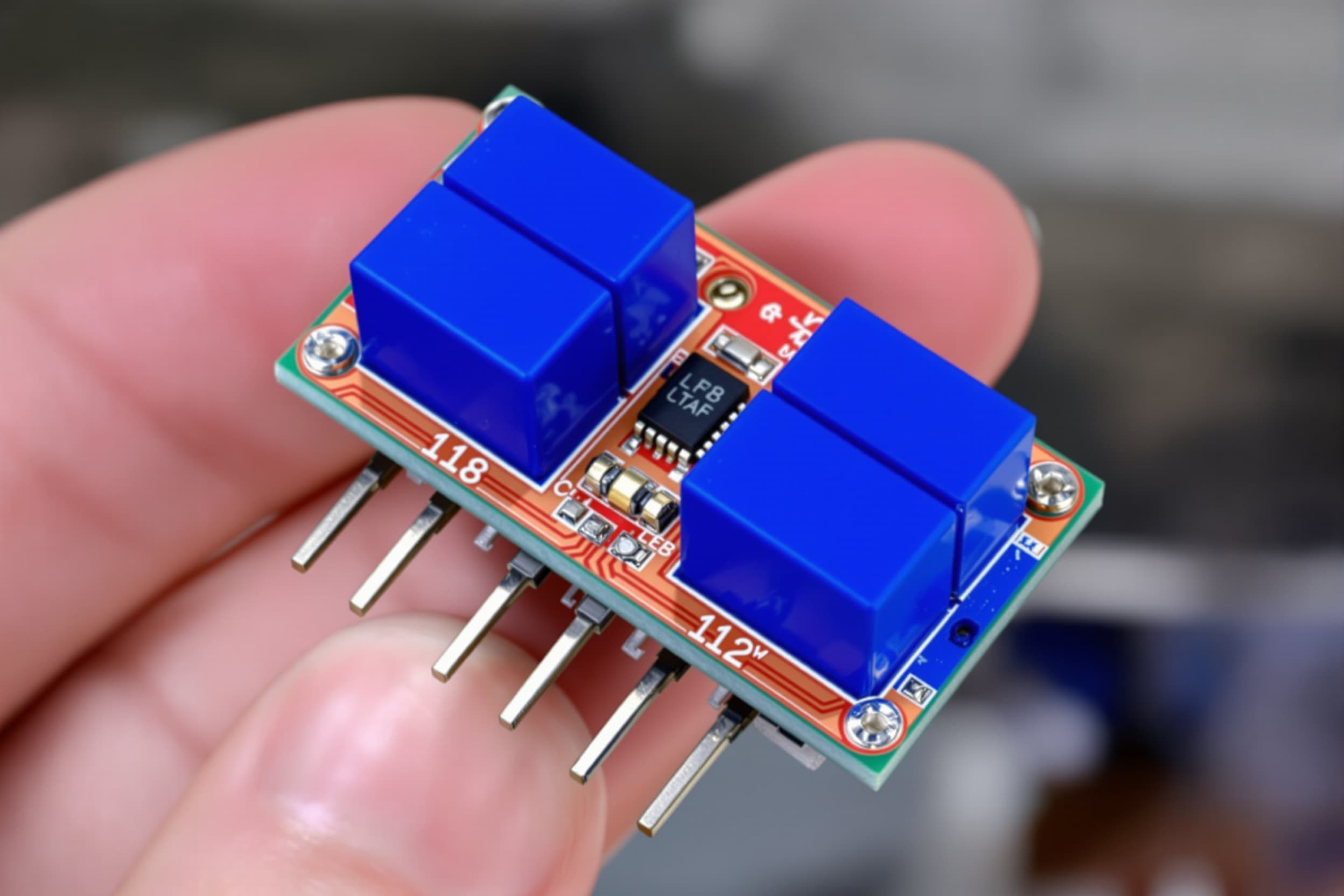
A decentralized solar charging system designed for de-occupied and war-affected areas without grid power. Converts solar panel voltage (18–60V) to stabilized 5V and 12V outputs via MPPT-like DC-DC conversion, enabling direct device charging even with damaged or second-life panels.

Feasibility at a glance
PT localization
7/10
High
Most steps can be localised in Portugal.
Per unit
€10–12 per unit (without panel)
at 500-unit volume
Starter batch
500units
minimum viable run
To first batch
14weeks
7 phases, design to ship
Budget
€60–75k
all-in estimate
Bottom line
Co-development with an EU electronics manufacturer offers the best balance for this humanitarian power system. Portugal lacks specialized power-electronics EMS at scale, but partnering with established EU firms (e.g. ZOLLNER in Germany, Lacroix Electronics in France, or Scanfil in Finland) provides proven PCB assembly, DC-DC expertise, and compliance support while keeping lead times under 12 weeks. White-label solar chargers exist but lack the ruggedized, wide-input-voltage design needed for damaged panels in conflict zones. EU co-development ensures full control over BOM sourcing (critical for supply continuity in wartime logistics), CE/RoHS/REACH compliance, and the ability to iterate firmware and circuit design for field feedback—essential when deploying to unpredictable environments.
4 capabilities
Charges smartphones, tablets, Wi-Fi routers, flashlights, and power banks directly from sunlight
Works even when the solar panel is cracked, old, or damaged by gunfire or shrapnel
Provides stable power for construction tools, walkie-talkies, and medical devices in off-grid areas
Allows households in war zones to stay connected and access information without a functioning electrical grid
5 stations · build route
Populate PCB with power electronics
Surface-mount and through-hole components (MOSFETs, inductors, capacitors) are placed and soldered onto the converter board.
Assemble and test DC-DC converter
The populated board is powered with a test solar input to verify voltage regulation and current output across all USB ports.
Attach MC4 cable and connectors
10 meters of outdoor-rated 2×0.75 mm cable is crimped with MC4 solar connectors and wired to the board input.
Install in weatherproof housing
The converter board and USB ports are secured inside a durable plastic enclosure with cable glands for solar input.
Final quality check and packaging
Each unit is tested under simulated panel conditions, labeled, and packed with user instructions in local language.
Populate PCB with power electronics
Surface-mount and through-hole components (MOSFETs, inductors, capacitors) are placed and soldered onto the converter board.
Assemble and test DC-DC converter
The populated board is powered with a test solar input to verify voltage regulation and current output across all USB ports.
Attach MC4 cable and connectors
10 meters of outdoor-rated 2×0.75 mm cable is crimped with MC4 solar connectors and wired to the board input.
Install in weatherproof housing
The converter board and USB ports are secured inside a durable plastic enclosure with cable glands for solar input.
Final quality check and packaging
6 identified · 4 blocking
Critical
Field Failure Under Shrapnel and Voltage Spike Conditions
This system is designed for war zones where solar panels may be cracked, bullet-riddled, or exposed to artillery shrapnel. Damaged panels can generate erratic voltage spikes (70–90V transients) or short-circuit conditions that standard DC-DC converters are not designed to handle. If the input protection circuit (TVS diodes, fuses, or crowbar MOSFETs) is underspecified, a single voltage spike can destroy the converter board, rendering the unit useless. In a conflict zone, a failed power system means no phone charging, no access to emergency information, and potential loss of life if medical devices or radios go dark. A 10% field failure rate would devastate user trust and GETMILK's reputation in humanitarian markets.
Mitigation — Design the input stage with military-grade over-voltage protection: 75V TVS diodes (e.g., Littelfuse SMCJ75A) on both solar input lines, a 5A fast-blow fuse, and a crowbar MOSFET circuit that shorts the input if voltage exceeds 65V for >10ms. Test prototypes under simulated battle conditions: apply 80–90V spikes, short-circuit the panel input, and drop the enclosure from 2 meters onto concrete. Partner with a test lab in Poland or Baltic states with experience in ruggedized military electronics (e.g., WB Electronics Poland, Milrem Robotics Estonia) to validate design before pilot production. Require the EMS to perform 100% functional testing with a programmable solar simulator (18V, 36V, 60V input sweeps) and log results with serial numbers. Include a 2-year field warranty and plan for a 5–10% spare unit buffer in the first shipment to replace any early failures without reordering.
High
MOSFET and Inductor Supply Shortage
High-current MOSFETs (e.g., Infineon IPD60R380P7S, STMicro STD20NF06L) and power inductors (10–100 µH, 5–10 A rating) are critical for DC-DC conversion. Global automotive and datacenter demand has led to 12–20 week lead times for these parts since 2021. A single backorder can delay the entire 500-unit pilot by 8+ weeks, especially if the EMS partner has low purchasing power with distributors. For a humanitarian deployment timeline, this risk is unacceptable—delays mean households in war zones remain without power for months.
Mitigation — Dual-source MOSFETs (Infineon + STMicro or Vishay) and inductors (Würth Elektronik + Coilcraft) in the BOM from day one. Require the EU EMS partner to pre-purchase long-lead components (MOSFETs, inductors, electrolytic capacitors) within 1 week of PO, with consignment inventory held at their facility. Allocate €1,500–2,000 buffer budget for expedited component shipping (Mouser/Farnell 48-hour delivery) if primary supplier falters. Design the circuit with pin-compatible MOSFET footprints so alternate parts can be drop-in substituted without PCB respin.
High
CE Compliance and EMC Testing Delays
Solar power systems with DC-DC converters and USB outputs fall under the EU Low Voltage Directive (2014/35/EU) and EMC Directive (2014/30/EU). To affix the CE mark, the product must pass EN 61204 (DC power supply safety), EN 55032 (EMC emissions), and EN 55035 (EMC immunity) testing at a notified lab (e.g., TÜV, SGS, Intertek). Test slots at EU labs are often booked 4–6 weeks in advance, and a single failure (e.g., conducted emissions exceeding limits) requires circuit redesign, new PCBs, and re-testing—adding 6–8 weeks. Without CE compliance, the product cannot legally be sold or distributed in the EU, and many humanitarian NGOs (ICRC, UNHCR) require CE marking for equipment used in field operations.
Mitigation — Engage an EMC pre-compliance testing partner (many EU EMS providers have in-house semi-anechoic chambers) to catch emissions/immunity issues before formal testing. Budget €3,000–5,000 for full CE test campaign and allocate 3 weeks in the project timeline. Work with the EMS to design EMC mitigations into the first PCB spin: ferrite beads on USB outputs, RC snubbers on MOSFET gates, shielded enclosures with proper grounding. Reserve a test slot at TÜV or SGS as soon as the PCB layout is finalized (week 4–5 of the project), even if first articles aren't ready—canceling a booking is easier than waiting 6 weeks for a new slot. If testing fails, have a backup 'plan B' PCB layout ready with aggressive filtering so a respin can be turned in 2 weeks instead of 4.
High
Last-Mile Delivery to Conflict Zones
Even if production and CE compliance go smoothly, delivering 500 units from Lisbon or an EU EMS facility to households in eastern Ukraine, Gaza, or rural Syria presents severe logistical challenges. Commercial couriers (DHL, FedEx) often refuse shipments to active conflict zones due to insurance restrictions. Land routes via Poland or Romania may be disrupted by border closures, fuel shortages, or military checkpoints. Air freight via humanitarian corridors (ICRC, UNHCR, or military transport) is limited and requires 4–8 weeks advance booking. If units sit in a warehouse in Rzeszów or Bucharest for weeks, the entire project timeline slips and end-users remain without power.
Mitigation — Partner with an established humanitarian logistics NGO (ICRC, UNHCR, Médecins Sans Frontières, or local Ukrainian groups like Nova Poshta Humanitarian) from project kickoff. Secure a logistics commitment letter before production starts, ensuring they can accept 500 units (approx. 200 kg, 1.5 m³) and deliver within 2–3 weeks of arrival at EU border. Use military-standard packaging (double-walled cardboard, foam inserts, waterproof poly bags) to survive rough handling on cargo trucks and helicopters. Split the shipment into 3–5 smaller batches (100 units each) and route via multiple border crossings (Poland, Romania, Slovakia) to derisk a single shipment loss. Include GPS trackers (€5–10 per pallet) on each batch so GETMILK and NGO partners can monitor progress in real time. For future scale-up, explore in-country final assembly in Poland or western Ukraine (cable attachment, labeling, packaging) using locally sourced labor and shipped-in PCBs/components—cuts last-mile lead time by 2–3 weeks and supports local economy.
Medium
Intellectual Property Theft and Grey-Market Clones
The DC-DC converter circuit, BOM, and wide-input-voltage topology represent significant engineering IP. If a Chinese EMS is used (or even an EU partner subcontracts PCB fab to Asia), the design can be reverse-engineered, cloned, and sold on Alibaba or AliExpress within 3–6 months. Grey-market clones may use counterfeit capacitors or underrated MOSFETs, leading to field failures that damage GETMILK's reputation and harm end-users. In conflict zones, trust in equipment reliability is paramount—faulty clones could endanger lives if they fail to charge critical medical devices or communication equipment.
Mitigation — Require the EU EMS to fab PCBs in-house or via vetted EU board houses (e.g., AT&S Austria, Schweizer Germany) with NDA and IP clauses. Avoid Chinese board shops entirely for pilot and first 2,000 units. Embed a unique serial number and QR code on each unit linking to a blockchain or secure registry, so field teams and end-users can verify authenticity. Consider filing for EU design protection (Community Design) or utility patent for the wide-input-voltage circuit topology, enabling legal action against clones sold in EU markets. For China-sourced components (capacitors, connectors), use trusted distributors (Mouser, Farnell, RS Components) rather than direct Shenzhen buys to reduce counterfeit risk.
Medium
MC4 Cable and Connector Lead Time
MC4 solar connectors and outdoor-rated 2×0.75mm cable (UV-resistant, –40 to +85°C) are commodity items, but demand surges during solar installation seasons (spring/summer in EU). A 500-unit order requires 500 sets of MC4 cables (10 meters each = 5,000 meters total cable + 1,000 connectors). If the EMS partner orders from a secondary distributor or Chinese supplier, lead times can stretch to 6–8 weeks, especially if the primary supplier (Phoenix Contact, Stäubli, or Amphenol) is out of stock. Cable assembly (crimping, heat-shrinking, continuity testing) adds another 1–2 weeks if done in-house; outsourcing to a cable specialist can save time but adds €1.50–2.00 per unit cost.
Mitigation — Pre-purchase MC4 connectors and cable from Phoenix Contact or Stäubli (both have EU warehouses with 1–2 week delivery) as soon as the project is greenlit. Store cable reels and connector boxes at the EMS facility under consignment or at a third-party logistics provider (e.g., Kuehne+Nagel) to derisk supplier delays. If in-house cable assembly creates a bottleneck, outsource to a dedicated EU cable assembler (e.g., LAPP Group Germany, Helukabel, or a Portuguese wire harness shop like Firmo if they have capacity). Specify in the EMS contract that cable assembly happens in parallel with PCB population (weeks 6–8) rather than sequentially, shaving 1–2 weeks off critical path. For future production runs, consider switching to pre-made 10m MC4 cable assemblies from Phoenix Contact (part MC4-ASSY-…) to eliminate crimping labor and QC risk, even if per-unit cost rises €1–1.50.
14 weeks to first batch
Circuit Design Lock and BOM Freeze
wk 1–2Component Procurement and PCB Fabrication
wk 3–5SMT and Through-Hole PCB Assembly
wk 6–7Cable Assembly and Input/Output Integration
wk 8–9Functional Testing with Solar Simulator
wk 10–11EMC/CE Testing and Compliance Documentation
wk 12–14Final Packaging and Humanitarian Documentation
wk 15Circuit Design Lock and BOM Freeze
wk 3–5 is the longest stretch — Component Procurement and PCB Fabrication takes 3 weeks of the 15 weeks on this build.
8 materials · 7 processes
Materials
Processes
468 Portuguese manufacturers matched
None cover the whole build — it splits across steps.
15 tasks · 14 weeks to first batch
Week 1
2 tasks
Lock circuit design and freeze BOM with dual-source MOSFETs/inductors
Finalize DC-DC buck converter schematic (18–60V input, 5V/12V dual-rail, MPPT-like tracking, TVS over-voltage protection). Complete 2-layer PCB layout (100×80mm FR4, 2oz copper, ENIG finish). Select pin-compatible alternates for MOSFETs (Infineon + STMicro) and inductors (Würth + Coilcraft). Export Gerber, BOM CSV, pick-and-place centroid. Internal design review for thermal/EMC. Deliver design package to shortlisted EU EMS partners.
Select EU EMS partner and negotiate 500-unit pilot terms
Issue RFQ to ZOLLNER (Germany), Lacroix Electronics (France), Scanfil (Finland), PKC Group (Estonia). Request quotes for 500 units including PCB fab, SMT/THT assembly, functional testing, and CE compliance support. Negotiate component consignment (pre-purchase MOSFETs, inductors, capacitors within 1 week of PO), 12-week lead time, and €11–13/unit target. Sign NDA with IP protection clause (no subcontracting PCB fab to Asia). Issue PO by end of week 1.
Weeks 2–3
3 tasks
Pre-purchase long-lead components (MOSFETs, inductors, capacitors)
waits on Select EU EMS partner and negotiate 500-unit pilot terms
EMS partner orders critical parts from authorized distributors: MOSFETs (Infineon IPD60R380P7S + STMicro alternate), inductors (Würth Elektronik 10–100µH, 5–10A), electrolytic capacitors (Nichicon, Panasonic), USB sockets, MC4 connectors (Phoenix Contact or Stäubli). Verify 1–2 week delivery commitments. Allocate €1.5k–2k buffer for expedited Mouser/Farnell shipping if primary supplier backordered. Inspect incoming MOSFETs and capacitors for counterfeit markings (X-ray or visual). Store at EMS facility under consignment.
Fabricate PCBs at EU board house with ENIG finish
waits on Lock circuit design and freeze BOM with dual-source MOSFETs/inductors
EMS sends Gerber files to vetted EU PCB fab (AT&S Austria, Schweizer Germany, or in-house). Specify 2-layer FR4, 1.6mm, 2oz copper, ENIG surface finish for lead-free soldering, 100×80mm panel size. Order 550 boards (500 + 10% buffer). Expected lead time: 7–10 days. Perform incoming inspection for copper thickness, hole quality, and silkscreen legibility. Reject any boards with delamination or solder mask defects.
Source IP65 enclosures and MC4 cable assemblies
waits on Select EU EMS partner and negotiate 500-unit pilot terms
Order 550 ABS or polycarbonate enclosures (IP65-rated, ~120×100×50mm, cable glands for 2×0.75mm solar cable) from OKW Gehäusesysteme (Germany) or Bopla. Order 550 sets of 10-meter MC4 cable assemblies (Phoenix Contact MC4-ASSY or equivalent, UV-resistant, –40 to +85°C, black jacket, male+female connectors). Delivery target: week 3. Store at EMS facility. If pre-made cables unavailable, order bulk cable reels and MC4 connectors for in-house crimping.
Weeks 4–7
3 tasks
SMT and through-hole PCB population at EMS facility
waits on Pre-purchase long-lead components (MOSFETs, inductors, capacitors), Fabricate PCBs at EU board house with ENIG finish
EMS performs automated pick-and-place for surface-mount components (MOSFETs, capacitors, resistors, IC regulators), reflow soldering, AOI inspection. Hand-solder through-hole parts (inductors, USB sockets, terminal blocks), wave solder, flux cleaning. Visual inspection under magnification. Rework any boards with solder bridges, tombstoning, or missing components. Expected yield: 95–98%. Deliver 500 populated PCBs by end of week 5.
Reserve CE test slot at TÜV/SGS for week 9–10
Contact TÜV Rheinland, SGS, or Intertek to book EMC/LVD testing slot for 3–5 sample units. Request combined EN 61204 (safety), EN 55032 (emissions), EN 55035 (immunity) test campaign. Confirm 2–3 week turnaround for test reports and declaration of conformity. Pay deposit (typically €1k–2k). Reserve backup slot 2 weeks later in case first test fails and PCB respin needed.
Assemble enclosures and integrate MC4 cables to PCBs
waits on Source IP65 enclosures and MC4 cable assemblies, SMT and through-hole PCB population at EMS facility
Weeks 8–16
7 tasks
Functional test all 500 units with programmable solar simulator
waits on Assemble enclosures and integrate MC4 cables to PCBs
EMS sets up 2 test stations with programmable power supplies (simulating 18V, 36V, 60V solar input at 1–3A). Connects each unit, applies voltage sweeps, loads USB ports with electronic loads (0.5A, 1A, 2A), measures output regulation (±5% tolerance), ripple (<200mV), over-voltage trip at 70V, short-circuit protection. Records pass/fail with serial numbers in database. Test time: 10–15 min/unit. Throughput: 40–50 units/day with 2 stations. Rework or reject any units failing voltage/protection specs. Complete by week 8.
Conduct EMC pre-compliance testing and fix any emissions issues
waits on SMT and through-hole PCB population at EMS facility
EMS or third-party lab performs informal EMC scan on first 10 units using semi-anechoic chamber or near-field probe. Check conducted emissions, radiated emissions, ESD immunity. If any failures detected (e.g., switching noise above EN 55032 Class B limits), implement circuit fixes: add common-mode chokes on USB outputs, RC snubbers on MOSFET gates, ferrite beads on input lines, improve enclosure grounding. If major redesign needed, order revised PCBs (2-week respin) and re-populate 5 units for formal testing.
6 roles to fill before month one
Production partner and supply-chain lead
EMS Program Manager (ZOLLNER, Lacroix, Scanfil, or PKC)
Owns PCB fab, SMT/THT assembly, component procurement (MOSFETs, inductors, capacitors), functional testing, and schedule. Critical for managing 12-week lead time, pre-purchasing long-lead parts, and coordinating CE compliance support. Weekly sync calls required to track component delivery, yield, and test station readiness.
Circuit design reviewer and EMC troubleshooter
Power Electronics Engineer (EMS in-house or contract)
Validates DC-DC converter thermal management, over-voltage protection circuit (TVS diodes, crowbar MOSFET), and EMC pre-compliance (ferrite beads, snubbers, grounding). Essential if pre-compliance testing reveals conducted emissions failures—can recommend component swaps or layout fixes without full PCB respin, saving 2–4 weeks.
Compliance testing coordinator
CE Test Lab Project Manager (TÜV Rheinland, SGS, or Intertek)
Reserves test slot for EN 61204, EN 55032, EN 55035, manages sample shipment, interprets test reports, and issues declaration of conformity. Key contact if any test fails—can advise on minimum circuit changes to pass re-test and expedite turnaround from 3 weeks to 10 days if urgent.
Last-mile delivery partner to conflict zones
5 things to avoid in this plan
lead time
Watch for MOSFET and inductor lead-time spikes—pre-purchase Infineon + STMicro alternates and Würth + Coilcraft inductors within 1 week of PO, with €1.5k–2k expedite buffer.
certification
Lock in CE test slot at TÜV/SGS by week 4 even if samples not ready—6-week booking delays can derail entire 14-week timeline; reserve backup slot for potential respin.
watch-out
Validate over-voltage protection circuit under 70–90V transients and shrapnel-damage scenarios before pilot production—field failures in war zones = loss of user trust and potential harm.
lead time
Secure humanitarian logistics commitment (ICRC, UNHCR, Nova Poshta) by week 3—commercial couriers refuse conflict-zone delivery; units stuck at EU border for weeks nullifies entire project.
watch-out
2 tasks in week 1
Lock circuit design and freeze BOM with dual-source MOSFETs/inductors
Each unit is tested under simulated panel conditions, labeled, and packed with user instructions in local language.
Component Procurement and PCB Fabrication
SMT and Through-Hole PCB Assembly
Cable Assembly and Input/Output Integration
Functional Testing with Solar Simulator
EMC/CE Testing and Compliance Documentation
Final Packaging and Humanitarian Documentation
EMS or subcontractor mounts populated PCBs and USB output modules inside enclosures using standoffs. Routes MC4 cable through cable glands, ensuring IP65 seal integrity. Solders or screw-terminals cable to PCB input pads. Performs continuity and hi-pot testing (1000V DC, 1 second) on each cable assembly. Labels each unit with serial number, input/output specs (18–60V → 5V/12V), safety warnings in Ukrainian or other target language. Closes and seals enclosures. Expected throughput: 50–70 units/day.
Submit samples to TÜV/SGS and obtain CE test reports
waits on Reserve CE test slot at TÜV/SGS for week 9–10, Conduct EMC pre-compliance testing and fix any emissions issues
Ship 3–5 tested units to TÜV/SGS for formal EN 61204, EN 55032, EN 55035 compliance testing. Lab performs safety checks (insulation resistance, ground continuity, temperature rise), EMC emissions/immunity tests, issues test reports and declaration of conformity. If any test fails, implement fixes per task-010 and re-submit. Expected turnaround: 2–3 weeks. Receive all passing test reports and CE declaration by week 11.
Prepare technical file and affix CE marking to all units
waits on Submit samples to TÜV/SGS and obtain CE test reports
Compile CE technical file: schematics, BOM, PCB layout, test reports (EN 61204, EN 55032, EN 55035), user manual, risk assessment, declaration of conformity. Store file for 10 years per EU regulations. Print CE mark on enclosure label (next to serial number) and in user manual. Verify mark size and format per 2014/35/EU and 2014/30/EU requirements. Update labeling template for remaining units.
Localize user manuals and quick-start guides in Ukrainian
Translate user manual into Ukrainian (or Arabic, depending on deployment target). Include illustrated instructions for connecting MC4 cable to solar panel, plugging USB devices, troubleshooting (no output, overheating, etc.). Design laminated quick-start card with diagrams only (no text) for elderly or low-literacy users. Print 500 manuals and 500 quick-start cards. Partner with Ukrainian NGO or diaspora community for translation review and cultural appropriateness.
Final packaging with humanitarian-grade protection and labeling
waits on Prepare technical file and affix CE marking to all units, Localize user manuals and quick-start guides in Ukrainian
Pack each CE-marked unit in double-walled cardboard box with foam inserts or bubble wrap. Include printed user manual, quick-start card, and QR code linking to online authenticity registry and support videos. Print serial number and CE mark on exterior label. Palletize 50 units per pallet, shrink-wrap for rough transport. Prepare customs paperwork: commercial invoice, packing list, HS code 8504.40, certificate of origin, CE declaration. Coordinate with ICRC or UNHCR logistics for pickup by week 13.
Secure humanitarian logistics partnership for last-mile delivery
Negotiate logistics commitment with ICRC, UNHCR, Médecins Sans Frontières, or Ukrainian NGO (Nova Poshta Humanitarian). Confirm ability to accept 500 units (~200 kg, 1.5 m³) and deliver to eastern Ukraine, Gaza, or target region within 2–3 weeks of EU border arrival. Split shipment into 3–5 batches (100 units each) routed via Poland, Romania, Slovakia border crossings to derisk loss. Attach GPS trackers (€5–10/pallet) for real-time monitoring. Finalize pickup schedule for week 13–14.
Humanitarian Logistics Officer (ICRC, UNHCR, or Nova Poshta Humanitarian)
Negotiates logistics commitment, confirms ability to transport 500 units (~200 kg) from EU border to eastern Ukraine or target region within 2–3 weeks. Coordinates pickup schedule, customs clearance, GPS tracking, and multi-route shipment (Poland, Romania, Slovakia) to derisk loss. Without this contact, units could sit in warehouses for months.
Expedited parts sourcing and counterfeit mitigation
Component Distributor Account Manager (Mouser, Farnell, or RS Components)
Provides real-time stock visibility for MOSFETs (Infineon, STMicro), inductors (Würth, Coilcraft), and capacitors. Can expedite 48-hour delivery if EMS partner's primary supplier backordered, preventing 8+ week delays. Verifies parts are from authorized supply chain (no counterfeit risk from grey-market Shenzhen brokers).
Localization and user-manual reviewer
Ukrainian Translator / Cultural Advisor (diaspora community or NGO)
Translates user manual and quick-start guide into Ukrainian, reviews for cultural appropriateness and technical clarity. Ensures instructions are understandable by elderly users and children in rural, low-infrastructure areas. Can advise on safety warnings (e.g., avoid using near active shelling) and troubleshooting language that builds trust in conflict-zone context.
Require EU-only PCB fab (AT&S, Schweizer, or EMS in-house) with NDA and IP clause—Chinese board shops = circuit clones on Alibaba in 6 months, grey-market units with counterfeit components endangering end-users.
468 matched · 8 shown, ranked by coverage
Covers, left to right: PCB Fabrication · SMT Assembly · Through-Hole Assembly · Cable Assembly · Testing & Inspection · Final Assembly · Packaging
Manufacturer
Location
Covers
Certifications
People
Portuguese producers per required step
Final Assembly
369
Testing & Inspection
178
SMT Assembly
36
Cable Assembly
12
Through-Hole Assembly
7
PCB Fabrication
6
Packaging
0
How many cover more than one step
The gap
Co-development with an EU electronics manufacturer offers the best balance for this humanitarian power system. Portugal lacks specialized power-electronics EMS at scale, but partnering with established EU firms (e.g. ZOLLNER in Germany, Lacroix Electronics in France, or Scanfil in Finland) provides proven PCB assembly, DC-DC expertise, and compliance support while keeping lead times under 12 weeks. White-label solar chargers exist but lack the ruggedized, wide-input-voltage design needed for damaged panels in conflict zones. EU co-development ensures full control over BOM sourcing (critical for supply continuity in wartime logistics), CE/RoHS/REACH compliance, and the ability to iterate firmware and circuit design for field feedback—essential when deploying to unpredictable environments.
Send one RFQ to the top 4
Keenfinity EMS, Uartrónica, Proto-Electronics, Exatronic — same package, one click.