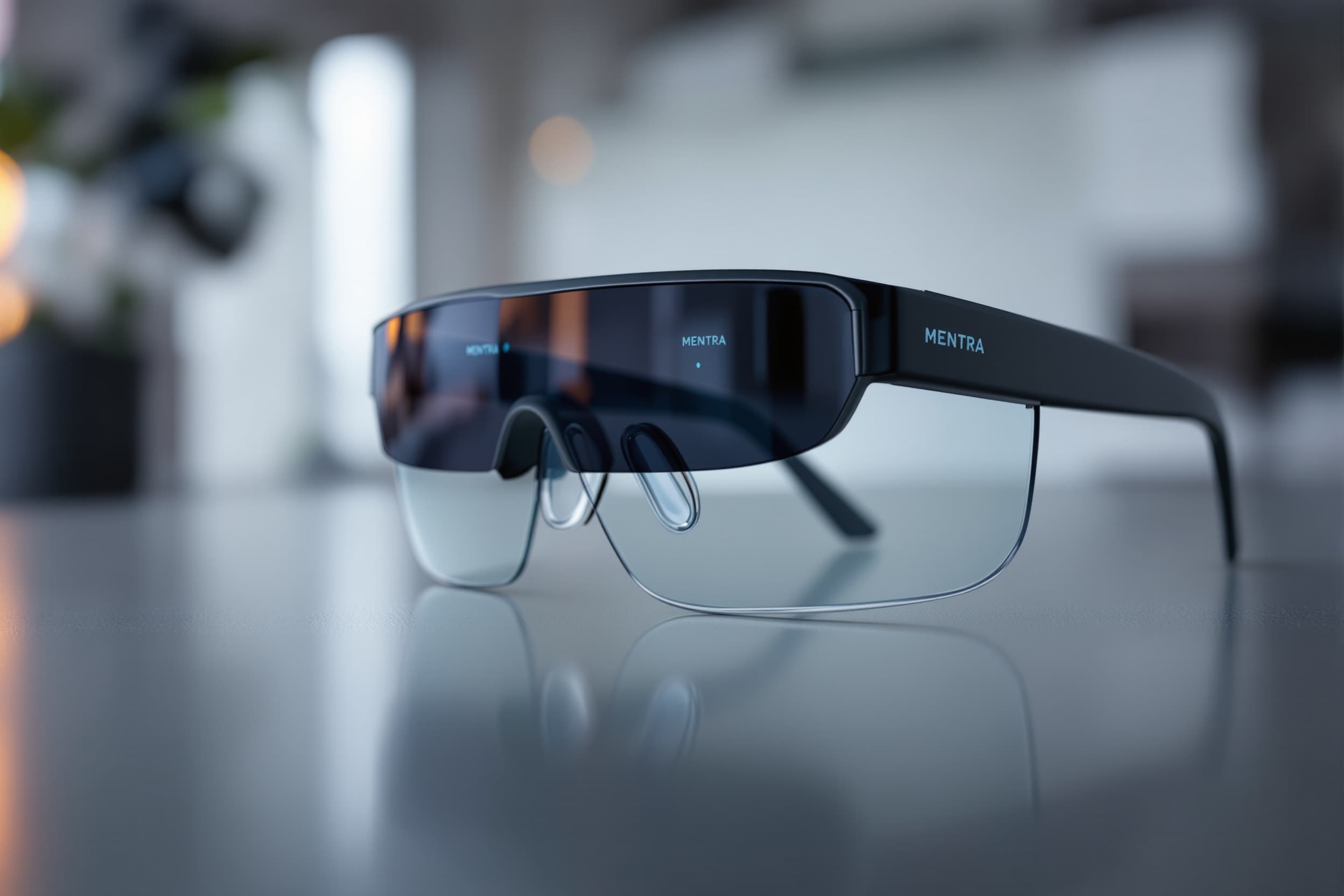
Open-source smart glasses platform with integrated camera, microphones, speakers, and AI processing. Runs MentraOS with full SDK support for custom app development and deployment. Designed for enterprise field work, hands-free video calls, real-time diagnostics, and AI-assisted workflows across aviation, healthcare, agriculture, and industrial sectors.

Feasibility at a glance
PT localization
3/10
Low
Only finishing and testing can be localised in Portugal.
Per unit
$300–400
at 500-unit volume
Starter batch
500units
minimum viable run
To first batch
28weeks
8 phases, design to ship
Budget
€195–240k
all-in estimate
Bottom line
Smart glasses are highly complex wearable electronics requiring specialized optics, miniaturized PCB assembly, low-power chipset integration, and extensive firmware/testing—capabilities absent in Portugal's manufacturing base. Co-development with an established EU wearables/optics partner (e.g. Zeiss Vision Care in Germany or a Scandinavian electronics contract manufacturer) provides access to optical expertise, flex-PCB assembly lines, and regulatory know-how for CE/RED/RoHS compliance while keeping IP and supply chain within the EU. The 500-unit pilot volume is too small to justify fully local tooling but too strategic (open-source platform with SDK) to risk in China. EU co-development balances time-to-market, quality control, and long-term platform sovereignty.
4 capabilities
Captures hands-free HD video and audio of real-world tasks so workers can document inspections, repairs, or field visits without holding a phone.
Runs custom AI apps that provide live captions, translations, diagnostics, and step-by-step guidance directly in the wearer's view.
Connects to video call platforms like Teams and Google Meet so remote experts can see what the wearer sees and provide real-time help.
Accepts voice commands and touch gestures to control apps, navigate menus, and trigger recordings without interrupting physical work.
5 stations · build route
Injection mold frame and temples
Polycarbonate front and arms molded, then CNC-finished for button and hinge precision.
Fabricate and populate main PCB
Multi-layer flex-rigid PCB fabricated, then SMT assembly of MTK8766, power management, and Bluetooth ICs.
Integrate camera and sensor modules
Camera, microphone array, and swipe sensor aligned and bonded into frame cavities with adhesive.
Assemble battery and audio components
260mAh cell installed in temple, stereo speakers mounted, and USB-C port soldered to PCB.
Flash MentraOS and final test
Firmware loaded, Bluetooth pairing verified, camera/audio checked, then packaged with case and cable.
Injection mold frame and temples
Polycarbonate front and arms molded, then CNC-finished for button and hinge precision.
Fabricate and populate main PCB
Multi-layer flex-rigid PCB fabricated, then SMT assembly of MTK8766, power management, and Bluetooth ICs.
Integrate camera and sensor modules
Camera, microphone array, and swipe sensor aligned and bonded into frame cavities with adhesive.
Assemble battery and audio components
260mAh cell installed in temple, stereo speakers mounted, and USB-C port soldered to PCB.
Flash MentraOS and final test
Firmware loaded, Bluetooth pairing verified, camera/audio checked, then packaged with case and cable.
5 identified · 4 blocking
Critical
Intellectual Property and Firmware Leakage
MentraOS is the core differentiator—an open-source platform with SDK for custom AI apps. If the firmware, chipset integration code, or hardware schematics leak during manufacturing, competitors (especially low-cost Chinese ODMs) can clone the platform and undercut pricing within 6–9 months. Smart glasses require close collaboration between hardware manufacturer and software team, meaning the ODM will have access to PCB layouts, BOM, firmware binaries, and potentially SDK source code. At pilot scale (500 units), manufacturers may not enforce strict IP controls or NDAs as rigorously as for high-volume contracts.
Mitigation — Implement a tiered IP protection strategy: (1) Sign comprehensive NDAs and IP ownership clauses with the EU co-development partner, specifying that all schematics, PCB designs, and tooling remain GETMILK property. (2) Use encrypted firmware images and secure boot on the MTK8766 to prevent reverse engineering—only GETMILK can sign firmware updates. (3) Separate hardware manufacturing (PCB, frame, assembly) from firmware flashing—flash MentraOS in-house or at a trusted Portuguese facility (e.g. Siemens Healthineers PT) after final assembly. (4) Conduct regular audits of the manufacturer's facility and component sourcing to ensure no unauthorized copies or leaks. (5) Register design patents and trademarks in the EU for the frame design, swipe sensor UI, and MentraOS branding.
High
Component Supply Chain Fragility
Smart glasses depend on a complex global supply chain for specialized components: MTK8766 chipsets (Taiwan), 119° camera modules (Japan/China), 260mAh lithium-ion cells (South Korea/China), and miniaturized stereo speakers (China). The EU has limited domestic production of these components, creating dependencies on Asian suppliers. Lead times for camera modules and custom batteries are 12–16 weeks, and any disruption (chip shortage, shipping delays, geopolitical tension) can halt production. At 500-unit pilot volume, GETMILK has minimal negotiating power and will be deprioritized by component vendors during shortages.
Mitigation — Establish dual-source agreements for critical components: identify both Asian and EU distributors (e.g. Avnet, Würth Elektronik) who can supply MTK chipsets and camera modules with buffer stock. Pre-purchase long-lead components (MTK8766, camera modules, batteries) for 1,000 units before committing to final assembly. Build 8–12 weeks of safety stock for pilot production. Work with the EU co-development partner to qualify alternative camera modules (e.g. Sony IMX sensors via EU distribution) and battery suppliers (e.g. Varta Microbattery in Germany) to reduce single-source risk.
High
CE, RED, and RoHS Certification Delays
Smart glasses with integrated radio (Bluetooth 5.3), camera, and lithium-ion battery must comply with multiple EU directives: CE marking (general product safety), RED (Radio Equipment Directive 2014/53/EU), RoHS (hazardous substances), REACH (chemical registration), and potentially GDPR considerations for camera/audio recording. Certification requires testing at accredited EU labs for RF emissions, SAR (specific absorption rate), electrical safety, and battery safety (UN38.3). First-time certification for a new wearable electronics platform typically takes 12–16 weeks and costs €25,000–40,000. If the PCB layout, antenna design, or battery enclosure fails initial testing, redesigns add 8–12 weeks and require re-testing.
Mitigation — Engage an EU notified body (e.g. TÜV Rheinland, Intertek, or SGS) during the design phase to conduct pre-compliance testing of the MTK8766 PCB, Bluetooth antenna, and battery enclosure. The EU co-development partner (Zeiss, NOTE, or PARTNEREL) should have existing relationships with notified bodies and can accelerate the process. Budget €35,000 and 14 weeks for full CE/RED/RoHS certification. Use pre-certified Bluetooth modules (e.g. Nordic nRF52 or MTK modules with FCC/CE certification) to simplify RF testing. Ensure the Chinese or Asian component suppliers provide RoHS and REACH declarations of conformity for all parts (PCB, battery, camera, speakers). Conduct battery safety testing (IEC 62133, UN38.3) in parallel with RF testing to avoid serial delays.
High
Low Yield and Field Failures in Complex Wearable Assembly
Smart glasses integrate 12 sub-assemblies (frame, PCB, camera, microphones, speakers, battery, swipe sensor, USB-C port, lenses, case, cable) into a 43-gram wearable. First-run yield for complex wearables is typically 60–75%, meaning 25–40% of units fail initial testing due to camera misalignment, speaker connection issues, battery contact problems, or firmware flash failures. Even units that pass factory testing may experience field failures (battery swelling, hinge cracks, USB-C port detachment, camera condensation) within the first 90 days. At 500 units, a 10% field failure rate means 50 returns, overwhelming support and logistics for a startup. Poor yield also inflates cost per unit, as scrap and rework are amortized over the small batch.
Mitigation — Require the EU co-development partner to guarantee a minimum 85% first-pass yield and provide detailed yield data from similar wearable projects. Implement a rigorous factory acceptance test (FAT) protocol: 100% optical inspection of camera alignment, 100% RF testing of Bluetooth pairing, 100% audio testing of speakers/microphones, and 48-hour burn-in testing to catch infant mortality failures. Conduct a pilot run of 50 units with full teardown and failure analysis before committing to the 500-unit batch. Negotiate a warranty clause: manufacturer covers rework or replacement for any unit that fails within 90 days due to assembly defects. Build a 10% spare unit buffer (550 units produced, 500 shipped) to cover DOA (dead on arrival) and early returns. Establish a return and repair process in Portugal (e.g. at Siemens Healthineers PT or Philips PT) for fast turnaround on field failures.
Medium
28-Week Lead Time Vulnerable to Tooling and Testing Delays
The 28-week timeline assumes a linear path: 4 weeks for design freeze and tooling, 6 weeks for PCB fabrication and SMT assembly, 4 weeks for injection molding and frame finishing, 6 weeks for component integration and final assembly, 4 weeks for MentraOS flashing and testing, and 4 weeks for CE/RED certification and packaging. In practice, smart glasses development is highly iterative—camera alignment issues, antenna tuning, battery fit problems, or firmware bugs can each add 2–4 weeks. At pilot scale (500 units), the manufacturer may batch production with other projects, causing delays. First article inspection (FAI) often reveals tolerance issues in the polycarbonate frame or hinge mechanism, requiring mold adjustments.
Mitigation — Build a 6-week contingency buffer into the project plan, targeting first batch delivery in week 22 (best case) with week 28 as the committed date. Use rapid prototyping (3D-printed frames, hand-assembled PCBs) to validate fit, camera alignment, and firmware integration before committing to injection mold tooling. Require the EU co-development partner to provide weekly progress updates and milestone payments tied to deliverables (design freeze, FAI approval, first 50 units tested, CE certification submitted). Conduct a design-for-manufacturing (DFM) review with the partner before tooling kickoff to identify and fix tolerance, assembly, and testing issues early. If possible, split the project into two phases: Phase 1 (100 units, hand-assembled, 18 weeks) for beta testing, then Phase 2 (400 units, tooled production, 22 weeks) to derisk the timeline.
28 weeks to first batch
Design Freeze, Tooling, and Component Procurement
wk 1–5PCB Fabrication and SMT Assembly
wk 6–11Injection Molding and CNC Finishing of Frame and Temples
wk 12–15Camera, Sensor, and Audio Integration
wk 16–20Battery Assembly and USB-C Soldering
wk 21–22MentraOS Firmware Flashing and Functional Test
wk 23–26Prescription Lens Insert Fitting and Charging Case Assembly
wk 27–28Final QA, CE Labeling, and Packaging
wk 29–30wk 6–11 is the longest stretch — PCB Fabrication and SMT Assembly takes 6 weeks of the 30 weeks on this build.
6 materials · 7 processes
Materials
Processes
681 Portuguese manufacturers matched
None cover the whole build — it splits across steps.
11 tasks · 12 weeks to first batch
Week 1
2 tasks
Issue RFQ to three EU wearables co-development partners
Send detailed RFQ package (CAD, BOM, MentraOS spec, 500-unit volume, 28-week timeline) to NOTE (Sweden), PARTNEREL (Finland), and Zeiss Vision Care (Germany). Request quotes covering tooling NRE, per-unit cost, yield guarantees, IP/NDA terms, and CE/RED certification support. Schedule intro calls for week 2.
Pre-purchase long-lead components (MTK8766, camera, battery)
Place orders with EU distributors (Avnet, Würth Elektronik) for 600 units of MTK8766 chipsets, 119° camera modules, and 260mAh lithium-ion cells. Lock pricing and 12-week delivery. Secure buffer stock to derisk component shortages during assembly.
Weeks 2–3
3 tasks
Select EU co-development partner and sign NDA/contract
waits on Issue RFQ to three EU wearables co-development partners
Evaluate RFQ responses on cost, yield guarantees, wearables experience, and IP protection. Negotiate contract terms: milestone payments, 85% yield guarantee, tooling ownership, firmware security clauses. Sign master services agreement and comprehensive NDA covering MentraOS source code and hardware schematics.
Conduct DFM review with partner engineering team
waits on Select EU co-development partner and sign NDA/contract
Ship CAD files, PCB Gerbers, and MentraOS integration docs to selected partner. Schedule 2-day on-site DFM workshop to review frame tolerances, hinge design, camera alignment jigs, battery enclosure, antenna tuning, and firmware flashing process. Freeze design and approve tooling kickoff.
Engage EU notified body for CE/RED pre-compliance
Contract TÜV Rheinland or Intertek for CE, RED, RoHS, and battery safety (IEC 62133, UN38.3) certification. Submit preliminary PCB layout, Bluetooth antenna design, and battery enclosure drawings for pre-compliance review. Book testing slots for week 8–10.
Weeks 4–7
2 tasks
Approve first-article inspection (FAI) of molded frame
waits on Conduct DFM review with partner engineering team
Partner completes injection mold tooling and produces 10 sample frames. Inspect dimensional accuracy (hinge tolerances, button pockets, camera cavity alignment). Approve mold or request adjustments. Gate for full PCB and assembly production.
Validate MentraOS firmware flash and Bluetooth pairing
waits on Approve first-article inspection (FAI) of molded frame
Partner assembles 5 prototype units with hand-soldered PCBs. Load MentraOS firmware via USB-C and verify MTK8766 boots correctly, Bluetooth pairs with iOS/Android, camera captures 119° HD video, microphones and speakers function. Debug any firmware integration issues before scaling to 500 units.
Weeks 8–16
3 tasks
Complete CE/RED/RoHS lab testing and certification
waits on Validate MentraOS firmware flash and Bluetooth pairing
Submit 10 production-representative units to notified body for RF emissions (EN 300 328, EN 301 489), electrical safety (IEC 62368-1), battery safety (IEC 62133, UN38.3), and RoHS compliance testing. Address any non-conformities and obtain CE/RED certificates and declarations of conformity.
Approve pilot run of 50 units with full teardown analysis
waits on Validate MentraOS firmware flash and Bluetooth pairing
Partner produces first 50 units using production tooling and assembly process. Conduct 100% functional test (camera, audio, battery, Bluetooth). Perform teardown on 5 units to inspect solder joints, adhesive bonds, hinge durability. Measure yield and identify any systemic quality issues before committing to 500-unit batch.
Receive and QA final 500-unit batch in Portugal
waits on Complete CE/RED/RoHS lab testing and certification, Approve pilot run of 50 units with full teardown analysis
Partner ships 500 certified units (plus 50 spares) to GETMILK warehouse. Conduct incoming inspection: 10% sample functional test, cosmetic inspection, charging case verification. Log any DOA or defects. Prepare units for beta customer shipments and field trials.
Ongoing
1 task
Track field failures and coordinate warranty returns
waits on Receive and QA final 500-unit batch in Portugal
Monitor first 90 days of field use for battery swelling, hinge cracks, camera condensation, or firmware issues. Partner with Siemens Healthineers PT or Philips PT to establish local repair depot. Feed failure data back to EU partner for design improvements in next production run.
4 roles to fill before month one
Wearables Program Manager
Björn Andersson, NOTE AB (Sweden)
NOTE has proven experience in miniaturized electronics assembly, flex-rigid PCBs, and CE/RED certification for Nordic wearable brands. Björn can guide DFM, yield optimization, and scalable production roadmap for 500–5,000 unit volumes.
Optical Systems Engineer
Dr. Claudia Müller, Zeiss Vision Care (Germany)
Zeiss expertise in prescription-compatible frame design, optical alignment, and lens insert integration is critical for all-day wearability and camera FOV accuracy. Claudia can ensure frame tolerances meet both optical and mechanical requirements.
Notified Body Certification Lead
Hans van der Berg, TÜV Rheinland
Hans specializes in CE, RED, and RoHS certification for wearable electronics with Bluetooth radios and lithium-ion batteries. Early engagement accelerates pre-compliance and avoids costly redesigns during lab testing.
Component Distribution Manager
Maria Silva, Avnet Silica (Portugal/EU)
Maria can secure MTK8766 chipsets, camera modules, and batteries from authorized EU distributors with reasonable lead times and buffer stock, critical for derisking component shortages at 500-unit pilot scale.
5 things to avoid in this plan
lead time
Lock in EU co-development partner by week 3—delays in RFQ evaluation push the entire 28-week timeline and risk missing Q2 beta customer commitments.
lead time
Watch for first-article inspection (FAI) failures on frame tolerances or hinge geometry—mold adjustments add 4–6 weeks and can derail the production schedule.
lead time
Pre-purchase long-lead components (MTK8766, camera, battery) immediately—12–16 week lead times mean any delay blocks assembly even if tooling is ready.
watch-out
Enforce strict firmware security—encrypt MentraOS binaries and flash in-house or at a trusted Portuguese facility to prevent IP leakage during manufacturing.
watch-out
Plan for 10–15% field failure rate in first 90 days—build spare unit buffer and establish local repair depot to avoid overwhelming support and damaging beta customer relationships.
2 tasks in week 1
Issue RFQ to three EU wearables co-development partners
Design Freeze, Tooling, and Component Procurement
PCB Fabrication and SMT Assembly
Injection Molding and CNC Finishing of Frame and Temples
Camera, Sensor, and Audio Integration
Battery Assembly and USB-C Soldering
MentraOS Firmware Flashing and Functional Test
Prescription Lens Insert Fitting and Charging Case Assembly
Final QA, CE Labeling, and Packaging
681 matched · 8 shown, ranked by coverage
Covers, left to right: PCB Fabrication · SMT Assembly · Injection Molding · CNC Machining · Final Assembly · Testing & Inspection · Packaging
Manufacturer
Location
Covers
Certifications
People
Portuguese producers per required step
Final Assembly
369
CNC Machining
212
Testing & Inspection
178
Injection Molding
174
SMT Assembly
36
PCB Fabrication
6
Packaging
0
How many cover more than one step
The gap
Smart glasses are highly complex wearable electronics requiring specialized optics, miniaturized PCB assembly, low-power chipset integration, and extensive firmware/testing—capabilities absent in Portugal's manufacturing base. Co-development with an established EU wearables/optics partner (e.g. Zeiss Vision Care in Germany or a Scandinavian electronics contract manufacturer) provides access to optical expertise, flex-PCB assembly lines, and regulatory know-how for CE/RED/RoHS compliance while keeping IP and supply chain within the EU. The 500-unit pilot volume is too small to justify fully local tooling but too strategic (open-source platform with SDK) to risk in China. EU co-development balances time-to-market, quality control, and long-term platform sovereignty.
Send one RFQ to the top 4
Keenfinity EMS, Uartrónica, REROM, MOLDMAK — same package, one click.