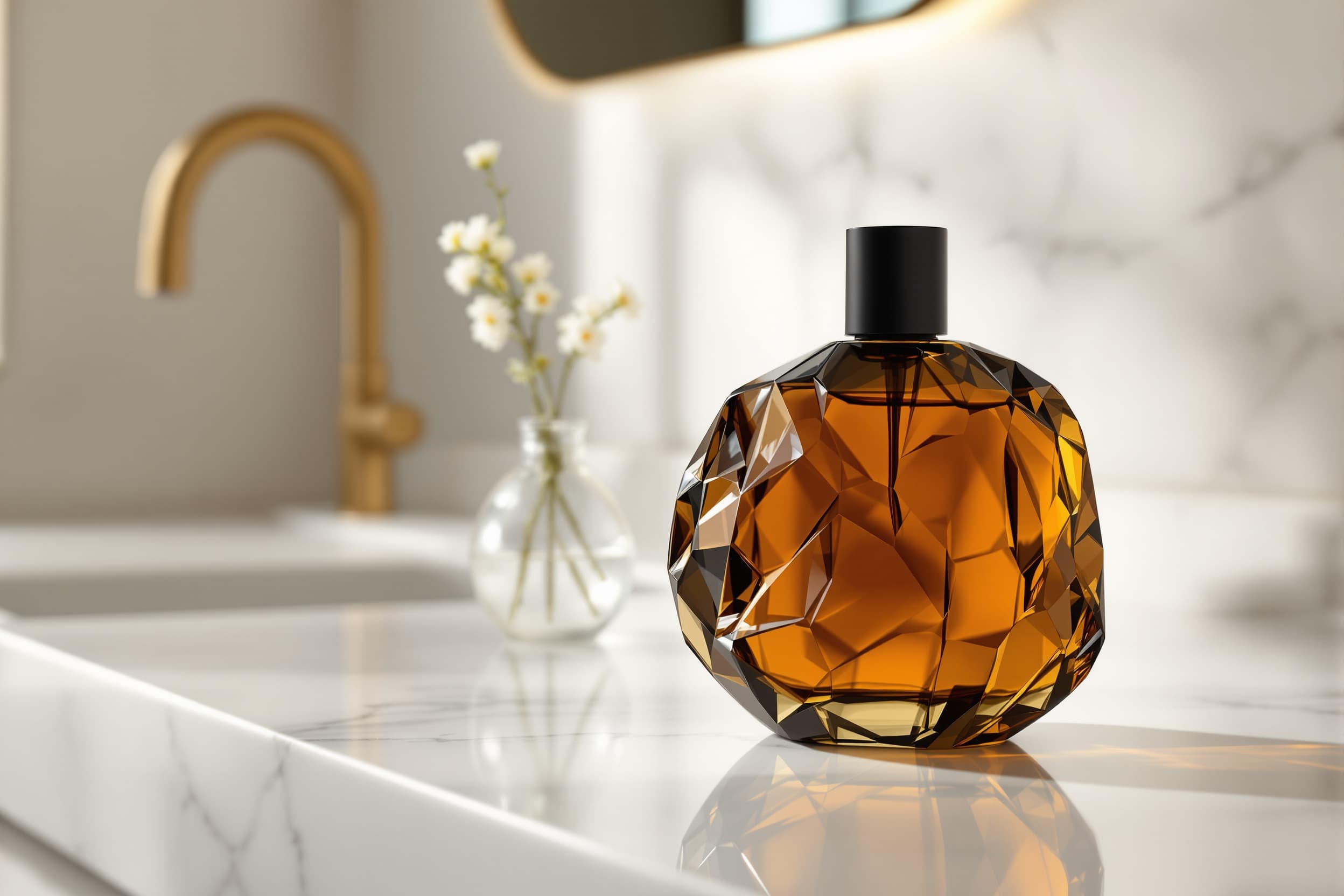
A sculptural glass perfume bottle with an organic, hand-friendly form factor. The dark tinted glass body features irregular faceted surfaces that catch light and provide tactile grip. Designed for premium fragrance presentation with a black plastic cap.

Feasibility at a glance
PT localization
8/10
High
The whole build can be sourced in Portugal.
Per unit
€3–€12
at 500-unit volume
Starter batch
500units
minimum viable run
To first batch
7 phases, design to ship
Budget
€15–28k
all-in estimate
Bottom line
Portugal hosts world-class glass bottle manufacturers (Vidrala, Verallia) with deep expertise in cosmetic and perfume packaging. The localizationScore of 8 confirms strong domestic capability. For a 500-unit run, local production delivers shorter lead times, eliminates import tariffs, enables rapid design iteration, and provides hands-on quality control. The glass industry in Portugal is mature, with established supply chains for injection-molded caps and gaskets, making end-to-end assembly feasible within one country.
2 capabilities
Stores and dispenses perfume while protecting it from light and air exposure
Provides a comfortable grip for precise application during daily use
5 stations · build route
Glass molding
Molten tinted glass is blown or pressed into a multi-part mold to create the irregular sculptural shape
Annealing and cooling
The formed glass is slowly cooled in a controlled oven to relieve internal stresses and prevent cracking
Cap injection molding
Black plastic cap with threads is injection molded from polypropylene
Assembly and seal fitting
Rubber gasket is fitted to the cap, then cap is thread-tested on the bottle neck for proper seal
Quality inspection and packaging
Each bottle is checked for cracks, seal integrity, and cosmetic defects before boxing
Glass molding
Molten tinted glass is blown or pressed into a multi-part mold to create the irregular sculptural shape
Annealing and cooling
The formed glass is slowly cooled in a controlled oven to relieve internal stresses and prevent cracking
Cap injection molding
Black plastic cap with threads is injection molded from polypropylene
Assembly and seal fitting
Rubber gasket is fitted to the cap, then cap is thread-tested on the bottle neck for proper seal
Quality inspection and packaging
Each bottle is checked for cracks, seal integrity, and cosmetic defects before boxing
5 identified · 1 blocking
High
Seal integrity and leakage defects
Perfume bottles must achieve near-perfect seal integrity to prevent evaporation of volatile alcohol-based fragrances. Mismatched thread tolerances between the glass neck (formed via molding) and the injection-molded cap, or poorly fitted gaskets, can lead to 5–10% failure rates. This is especially critical for sculptural 'irregular' bottle shapes where neck geometry may vary unit-to-unit. A leaking bottle damages brand reputation and triggers costly returns.
Mitigation — Specify a mandatory pressure-decay or vacuum-leak test for 100% of units before packaging. Work with the glass supplier to implement go/no-go thread gauges during annealing QC. Source gaskets from a specialized sealing supplier (e.g., a silicone valve specialist like Turtle Silicone Valve Factory if rubber compounds need customization) rather than generic cap vendors. Conduct a 50-unit pilot run with accelerated aging (elevated temperature) to validate seal performance before full production.
Medium
Glass supply-chain volatility
European glass manufacturers face energy cost fluctuations (natural gas prices) and sand supply constraints. In 2022–2023, several EU glassmakers temporarily idled furnaces due to energy pricing. For a 500-unit order, the risk is that lead times extend or suppliers deprioritize small batches during peak demand periods (Q4 fragrance season). Tinted glass also requires specialty batch production, which may only run monthly.
Mitigation — Dual-source glass body: pre-qualify both Vidrala and Verallia, and consider placing a deposit to reserve furnace time in advance. Alternatively, select a stock tint color (amber, cobalt) that runs continuously. Maintain a 4–6 week buffer in the production schedule and order caps/gaskets in parallel to avoid sequential delays.
Medium
Tooling and mold delivery delays
Custom glass bottle molds are precision steel tools that require 4–6 weeks to machine and validate. Delays in mold delivery cascade through the entire production schedule. If the sculptural design requires complex multi-part molds or iterative adjustments for draft angles and undercuts, tooling can slip by 2–4 weeks, pushing first-batch delivery into a competitor's launch window or missing a seasonal fragrance release.
Mitigation — Engage a local mold maker (Portugal has precision tooling shops serving Vidrala/Verallia) and request weekly progress photos. Use DFM (design-for-manufacturing) review with the glass supplier before finalizing CAD—simplify draft angles and eliminate undercuts where possible. Build a 2-week contingency buffer into the timeline. For urgent launches, consider starting with a white-label stock bottle (6-week lead time) while custom tooling completes, then transition to the bespoke design for subsequent batches.
Medium
Cosmetic packaging compliance (EU 1223/2009)
Perfume bottles must comply with EU Cosmetic Products Regulation (EC) 1223/2009, which governs material safety and labeling. The polypropylene cap and rubber gasket must be food-contact-grade or cosmetic-compatible (no phthalates, safe extractables). Tinted glass must not leach heavy metals (lead, cadmium) under REACH Annex XVII. If any supplier uses recycled glass or reclaimed rubber without certification, the product could fail safety testing or trigger a market recall.
Mitigation — Request material declarations and REACH/RoHS compliance certificates from all suppliers (glass, cap, gasket) before production. Specify virgin polypropylene and EPDM or silicone gasket materials explicitly in the purchase order. Conduct a one-time migration/extractables test via an accredited EU lab (e.g., SGS, Eurofins) on the first batch to confirm no leachables into ethanol-based perfume. Label the bottle with recycling codes (GL70 for glass, PP for cap) and ensure the brand owner has a cosmetic product safety report on file.
Low
Design replication and IP leakage
A sculptural, faceted bottle shape can be a key brand differentiator, but glass molds are physical objects that can be reverse-engineered or re-tooled by competitors. If working with a contract manufacturer that serves multiple cosmetic brands, there is a risk that the unique ergonomic form is adapted for another customer. EU design registration provides some protection, but enforcement can be slow and costly.
Mitigation — File an EU Registered Community Design (RCD) for the bottle shape before sharing CAD files with suppliers. Include exclusivity and non-disclosure clauses in the manufacturing contract, specifying that molds remain your property or must be destroyed after production. For the 500-unit pilot, consider tooling ownership rather than amortized mold rental. Watermark technical drawings and limit distribution of full 3D models.
12 weeks to first batch
Design finalization and mold engineering
wk 1–3Mold fabrication and first article sampling
wk 4–7Cap and gasket injection molding
wk 8–10Full production run – glass bottles
wk 10–11Assembly and seal fitting
wk 12Quality inspection and leak testing
wk 12Packaging and dispatch
wk 13Design finalization and mold engineering
wk 4–7 is the longest stretch — Mold fabrication and first article sampling takes 4 weeks of the 12.5 weeks on this build.
3 materials · 4 processes
Materials
Processes
559 Portuguese manufacturers matched
None cover the whole build — it splits across steps.
11 tasks · 12 weeks to first batch
Week 1
2 tasks
Select glass supplier and request DFM review
Contact Vidrala and Verallia with CAD files of the sculptural bottle. Request design-for-manufacturing feedback on draft angles, wall thickness, thread geometry, and tint availability. Obtain preliminary quotes for 500-unit batch including mold tooling cost.
Source cap and gasket suppliers in Portugal
Identify injection molding suppliers for polypropylene threaded cap (Firmo or cosmetic packaging specialist) and rubber/EPDM gasket suppliers. Request material compliance certificates (REACH, RoHS, food-contact) and MOQ/lead time for 550 units.
Weeks 2–3
2 tasks
Finalize bottle design and commission mold
waits on Select glass supplier and request DFM review
Incorporate DFM feedback from glass supplier into final CAD. Lock tint color via sample approval. Issue purchase order for steel mold fabrication to Portuguese tooling shop. Confirm thread specs match cap supplier drawings to ensure seal compatibility.
Order compliance testing slot with EU lab
Book SGS or Eurofins for migration/extractables testing (perfume alcohol simulant) and REACH heavy-metal screening on glass, cap, and gasket. Reserve test slot for week 8 to align with first-article samples.
Weeks 4–7
2 tasks
Approve first-article glass samples
waits on Finalize bottle design and commission mold
Review 10–20 trial bottles from glass supplier after mold completion. Inspect dimensional accuracy, tint uniformity, surface finish, and thread quality. Approve for production or request one revision cycle if geometry issues found.
Validate cap-gasket-bottle assembly fit
waits on Source cap and gasket suppliers in Portugal, Approve first-article glass samples
Receive injection-molded caps and gaskets from suppliers. Hand-assemble 10 sample units with first-article glass bottles. Test thread engagement, torque closure, and visual gasket seating. Identify any tolerance mismatches before full production.
Weeks 8–16
4 tasks
Execute 500-unit glass production run
waits on Approve first-article glass samples
Glass supplier schedules furnace time for 550-unit batch (500 + 10% overage). Monitor molding, annealing, and cooling. Ensure thread inspection with go/no-go gauges. Coordinate delivery of finished bottles to assembly site in compartmentalized cartons.
Perform final assembly and 100% leak testing
waits on Validate cap-gasket-bottle assembly fit, Execute 500-unit glass production run
At assembly facility, fit gaskets into caps and thread onto bottles with calibrated torque. Run pressure-decay or vacuum-leak test on every unit. Cull non-conforming bottles. Conduct 5% drop-test and thermal-cycle validation on sample batch.
Complete compliance testing and documentation
waits on Approve first-article glass samples, Order compliance testing slot with EU lab
Submit first-article samples to SGS/Eurofins for migration test (alcohol simulant into glass/cap/gasket) and REACH heavy-metal screening. Collect Certificates of Conformity and material declarations from all suppliers. Compile compliance dossier for EU Cosmetic Products Regulation.
Ongoing
1 task
Monitor seal integrity in first 30 days post-delivery
waits on Package and dispatch to brand warehouse
Track any leakage or cap-threading issues reported by the filling partner or end customers during the initial batch deployment. Document defect rate and root-cause analysis to inform any design tweaks for future reorders.
4 roles to fill before month one
Technical lead for mold design, annealing process, and first-article sampling
Glass Production Engineer at Vidrala or Verallia
You need an expert who understands sculptural glass forming and can optimize draft angles, wall thickness, and tint batch scheduling for a 500-unit pilot. They will troubleshoot any mold iterations and ensure thread geometry matches your cap supplier's specs.
Injection molding and cap-gasket integration
Cosmetic Packaging Specialist at Firmo or local cap supplier
Critical for sourcing food-contact-grade polypropylene caps and EPDM gaskets that achieve leak-proof sealing. They will provide material compliance certificates (REACH, RoHS) and coordinate thread tolerance with the glass supplier to prevent mismatches.
Migration/extractables testing and REACH screening
Compliance Testing Coordinator at SGS or Eurofins Portugal
You must validate that no harmful substances leach from glass, cap, or gasket into alcohol-based perfume. This contact books your test slot, interprets results, and provides the Certificate of Conformity required for EU Cosmetic Products Regulation compliance.
Steel mold fabrication for glass bottle
Portuguese Precision Tooling Shop (mold maker)
5 things to avoid in this plan
supply
Lock in furnace time early — European glass suppliers prioritize large batches; reserve your 500-unit slot 4–6 weeks ahead, especially if your tint color requires specialty batch production.
quality
Validate seal integrity obsessively — perfume leakage destroys brand reputation. Insist on 100% pressure-decay testing and conduct a 50-unit accelerated aging pilot before accepting the full batch.
lead time
Watch for mold delivery slips — custom glass tooling can delay 2–4 weeks if draft angles or undercuts require iteration. Build a 2-week buffer and request weekly progress photos from the tooling shop.
certification
Confirm material compliance upfront — polypropylene cap and rubber gasket must be food-contact-grade with REACH/RoHS certificates. One non-compliant component triggers a costly recall and blocks market entry.
2 tasks in week 1
Select glass supplier and request DFM review
Mold fabrication and first article sampling
Cap and gasket injection molding
Full production run – glass bottles
Assembly and seal fitting
Quality inspection and leak testing
Packaging and dispatch
Package and dispatch to brand warehouse
waits on Perform final assembly and 100% leak testing, Complete compliance testing and documentation
Pack inspected bottles in master cartons with pulp dividers. Label with batch codes, recycling symbols (GL70, PP), and any required cosmetic compliance markings. Palletize and arrange transport to brand owner's warehouse or contract filler.
A local mold maker accelerates lead time (4–6 weeks vs. 8+ weeks offshore) and allows you to visit the shop for progress checks. They ensure the multi-part mold handles the sculptural facets and produces consistent thread profiles critical for seal integrity.
quality
Plan for 10% glass breakage/rejects — order 550 units to net 500 sellable bottles. Glass molding, annealing QC, and assembly culling typically yield 5–10% scrap in pilot runs.
559 matched · 8 shown, ranked by coverage
Covers, left to right: Injection Molding · Final Assembly · Testing & Inspection · Packaging
Manufacturer
Location
Covers
Certifications
People
Portuguese producers per required step
Final Assembly
369
Testing & Inspection
178
Injection Molding
174
Packaging
0
How many cover more than one step
The gap
Portugal hosts world-class glass bottle manufacturers (Vidrala, Verallia) with deep expertise in cosmetic and perfume packaging. The localizationScore of 8 confirms strong domestic capability. For a 500-unit run, local production delivers shorter lead times, eliminates import tariffs, enables rapid design iteration, and provides hands-on quality control. The glass industry in Portugal is mature, with established supply chains for injection-molded caps and gaskets, making end-to-end assembly feasible within one country.
Send one RFQ to the top 4
Codica Cables, REROM, Porcher Industries, MOLDMAK — same package, one click.